
Episode 27: Interview with Matt Cullen
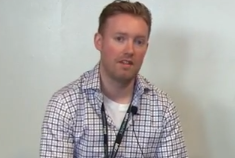
Today’s interview partner is Matt Cullen. Matt is an Internet Marketer, SEO, Social Media Expert and Music Composition. Currently he is working as a specialist in SEO and External Marketing for Vistaprint, a company providing professional marketing products and services.
This interview is also available on iTunes and on Youtube.
Follow OMReport on Facebook, Twitter or as to get the latest interviews fast.
Transcript
Matt Cullen is an External Marketing Specialist at the Organic Search Team at Vistaprint. Prior he worked at Catalyst Search Marketing as SEO Manager with well-known Fortune 500 companies, before he went to EF Educational Tours. In his spare time Matt serves as board member of a local domestic violence agency.
Andre Alpar: Today’s OMReport is with Matt. Matt could you please introduce yourself.
Matt Cullen: Matt Cullen, I work at Vistaprint out of the Boston area. I’m on their organic search team and I’ve been with the company since March, and before that in-house for a big educational travel company out of Cambridge, and then before that I was with an agency that had a lot of huge clients in the Fortune 500 space.
Andre Alpar: OK so you moved kind of from the agency side to the in-house side. So what was the biggest challenge when moving in-house? How was that different from your agency time?
Matt Cullen: Um, now you’re having to deal with, you know, the processes of getting stuff implemented yourself. Before when you were at the agency you gave them recommendations and then, you know, you let them take care of it. But now in the in-house you have to deal with, you know, creative, you have to deal with brand, legal and then the web developers to get things implemented.
Andre Alpar: Right, so you have to justify whether something is worth it or more worth it or more or less important for everyone.
Matt Cullen: Exactly. And they want a dollar amount, they want to know, is this change gonna make us this much money or how… Things like that.
Andre Alpar: Isn’t it very hard to guess for most technical SEO things.
Matt Cullen: It is. But the good thing is, you know, our country has a history so we know if you make significant changes to a particular page that are not search-friendly then we can say, well…
Andre Alpar: That cost us so and so much.
Matt Cullen: Yeah I mean if you guys go through with this new design we might not rank 3 anymore. We might be off the first page. And we can tie a dollar amount to that.
Andre Alpar: That’s kind of more like the defensive approach, right, if they change something to a negative, but let’s say you wanna, I dunno, add something to the page that was kind of like, you know, when is a defence situation against, you know, something that is good already but… but I think it’s a different situation when you wanna try something new to get to a next level and then to be able to guess that when you don’t have numbers yet…
Matt Cullen: That’s true.
Andre Alpar: In those cases it’s probably harder to put a dollar amount on that.
Matt Cullen: It is, but those are the most exciting parts of being in-house because you can, you know, create a strategy and then you can present it to the, you know, the people that, you know, are the ones that are making the decisions and then you can let them know, you can educate them on all the new algorithm changes and what we need to do going forward. So we have to let them know that the old way is not going to work for long. It might be working right now, but you know in three or four months it might not be working. So, and they understand that, I mean, that’s why they hire us, we’re the experts. So, as long as we put together, you know, a solid presentation and we can tell them that hey, this is going to help us in the long term. You know, we’re not gonna see it right now but, you know, the changes we make today could help us for the next two or three years.
Andre Alpar: Right. Vistaprint is a super international company, right?
Matt Cullen: Yeah we’re a…
Andre Alpar: Which countries are you serving?
Matt Cullen: I don’t know the exact amount but we are all over. Yeah.
Andre Alpar: So how do you steer, I mean how do you make sure that everybody’s kind of… How do you make sure everybody does the right thing?
Matt Cullen: Oh that’s… We’re very close with our EU team and our Australian and Japan team and it’s great because we’re able to educate them whereas they might be doing PPC, social and SEO for… They’re low-cal and they might not know as much about SEO as we do cos we’re specialised in our office. So it’s great for educating.
Andre Alpar: So it’s like a know-how centre and then you try to spread the know-how in subsidiaries.
Matt Cullen: Yeah. And when we do make changes we want to make them globally. We don’t just want to do one-offs and change something on US and Canada and then have the EU sites still on an old design, still using old tactics that don’t work, so we like to take a global approach and we’re moving more towards that every month. It’s so important.
Andre Alpar: Right. So, is your experience that things can be set up… do you… it probably would make sense to… so two questions that I came up with… so one is… probably it would make sense to first test one country and then, you know, do the roll-out later cos maybe something you figured out doesn’t work as it should?
Matt Cullen: Those are tactics that, you know… I know a lot of e-commerce companies have done stuff like that and I mean yeah it… sometimes you do that, you take one smaller company, you try out the tactics and whether it be PPC, SEO, you know, you try a new design of a certain page, a product page, checkout process and, you know, you look at the… you do split testing, you see if the changes worked, and if the changes worked let’s send it out globally. Let’s see how it does. But that’s one of the benefits of being, you know, global. So you can afford to do these tests without having to affect your major .com domain.
Andre Alpar: So how internationalisable are things? I mean, you know, the characters in the different countries they differ to a certain degree so I wonder what’s your gut feeling, you know, can every… will everything work the same in every country? Because like, conversion optimisation… I think it strongly differs. There’s countries who are like super open to giving an email address, others are willing to fill a whole form, others are super defensive on that. So where do you get that variation, because that’s so hard to figure out right.
Matt Cullen: It goes so far beyond just submitting text and copy for translation because people search differently in every country. You know, we need to… We can’t just dump things into Google translate. People… There’ll be completely different words for the same products in other countries and, you know, we’re set to make sure we have the best translation teams there and they have to let us know, you know, their keyword research, because that’s why we have SEOs in these other countries because we can’t be responsible. We know what works in the US but that doesn’t mean they’re gonna work over there. I mean I worked on Huggies many years ago, and over in the UK they call them… what do they call them… they don’t call them diapers, they call them… nappies! They call them nappies.
Andre Alpar: That’s cute.
Matt Cullen: You know so… you can’t just go into the UK with your USA approach because there, you know, nappies has a higher search volume than some of these more standard terms that the US customers are searching for.
Andre Alpar: Is there other things that you remember from your time working for that or other clients that differ from the UK and the US? Like, besides just the pure keywords when it comes to, I don’t know… are there things that…
Matt Cullen: Well, brands altogether. Like Arial I think was some sort of dishwashing, some sort of cleaning product and, you know, Arial did not even exist in the USA so we had to have unique campaigns for Arial altogether whereas certain things like Tide and other major brands, you know, they cross over into all the countries. But certain countries have specific brands, you know, with Proctor and Gamble or Kimberley Clark… And if those brands have been around for so long that they can’t drop it and tie it into the USA equivalent it’s just not gonna work cos they have such a footprint in the supermarkets.
Andre Alpar: Right. Would content marketing or like content creation or off-page optimisation… would that differ in the different countries or is that… are those approaches internationalisable from your point of view?
Matt Cullen: From what I’ve seen is, you know, different countries are more accepting of, you know, link outreach and, you know, guest blogging which people are getting away from now, but yeah I’ve seen that over the years that it’s very different when you’re trying to acquire and market to other countries. That’s why you need team on location. You can’t do everything out of the USA office.
Andre Alpar: Right. Is there probably something that always pops up on your mind when you… that was kind of a unique thing for you that came up in one country that you thought, wow that’s different? That you could probably share?
Matt Cullen: I’m trying to think of some of the ones that… I mean I know the differences with, you know, diapers and Arial, those really stick out. I can’t really think of anything other than those, or stuff that I can speak of at Vistaprint right now but… yeah, there’s just… there are constant challenges and what’s great is having the teams in local locale so we’re videoconferencing with them constantly and we’re sharing our tactics and figuring out ways that they can implement it on their end.
Andre Alpar: How are your experiences with href lang in general?
 Matt Cullen: Um well…
Andre Alpar: Have you been able to experiment with that already?
Matt Cullen: Oh yeah definitely. Several country codes, we have so many different countries that we serve, so we just need to…
Andre Alpar: Also several countries that share the same language, right?
Matt Cullen: Yes. Yes. It’s like, you know, Canada, there’s UK, so yeah I mean we just try to do the best practices that Google wants.
Andre Alpar: Right. Do you see them like really taking effect? Because my observations so far are that sometimes it seems like a rather weak signal and it’s not as strong as one would hope it is.
Matt Cullen: Yeah it is.
Andre Alpar: So I hope they’re gonna tighten up that a few notches up.
Matt Cullen: The thing is that Google’s getting so much smarter when it comes to that, that even if you don’t have the href lang tag, they’re on top of it. You know, they’re… Whereas before if you didn’t have those tags and you had different countries with similar content that were in the same language you can get dinged for that but now they realise, you know, your co.uk and your .com might have the same content, you might not have a href lang tag in there but they understand that that’s the best customer experience. And that’s what it comes down to, it’s the customer experience. As long as you’re not trying to deceive and you’re not trying to be evil then, you know, usually they’ll give you the benefit of the doubt. Especially I think it helps with bigger corporations too, you know, if you…
Andre Alpar: Because they are a huge brand themselves already.
Matt Cullen: Yeah I mean, you already have a footprint in a certain country and if you have a footprint in another country then, you know, they’ll understand that content’s gonna be similar but you know, they’re serving a different audience so…
Andre Alpar: So you mentioned you’ve been working in the education space before, right. Did I get that?
Matt Cullen: The educational space?
Andre Alpar: Yeah.
Matt Cullen: I mean I’ve done some educational seminars at…
Andre Alpar: No, no, I like… What was the job you did before?
Matt Cullen: Oh, oh! I worked at Educational Travel. For EF Educational.
Andre Alpar: OK they do those kind of like language travel things.
Matt Cullen: Yeah they specialise in sending you know, high school groups, you know, a teacher will get her class of 20 people to go…
Andre Alpar: That’s also quite an international company I know like, it is in Germany too.
Matt Cullen: Oh yeah. I think EF has over 30,000 employees worldwide.
Andre Alpar: Wow. So…
Matt Cullen: They have language schools, they have the travel programmes and then they have the tour directors and 24 hour support in each place that we travel, and I think… I mean, I’m just throwing this number out there, I think we have over… ‘we’… they have over 350 tours. So that means they have a presence all over the country. All over the world.
Andre Alpar: That was also quite an international setup. Did you steer like just the US or the whole international team? What was your role in it?
Matt Cullen: My role… I was responsible for multiple websites because we have EF college study tours, we had EF tours which was the high school, we have one for Girl Scouts and then also we had a Canada site.
Andre Alpar: So like different brands in the US.
Matt Cullen: Yeah different brands.
Andre Alpar: So what was special to work with that kind of topic? Because it’s something where I would think it’s really easy to get links, you just go to all the schools…
Matt Cullen: It’s not that easy.
Andre Alpar: And they’ll be happy to link and then you give them, I dunno…
Matt Cullen: The thing is that the majority of their business was high school, and the high schools aren’t gonna have the .ed links as much as the colleges are.
Andre Alpar: Right! But the high schools are still a little bit with website and there’s a lot of them, there’s just like huge potential to tap into.
Matt Cullen: There are. There is. And, you know, the thing is that a teacher might have a trip that they run every year but the school doesn’t want links back to EF because there are other companies that do it and there could be other teachers in that school that are travelling with other companies so, you know, it’s kind of a push and pull.
Andre Alpar: So if they were doing it they would probably link all of the vendors.
Matt Cullen: Yeah they could do that. Yeah. But… one of the issues at EF was cannibalisation because they have…
Andre Alpar: The different brands that target different keywords.
Matt Cullen: Yeah exactly, we had EF college study tours, which was more educational-focused, but then we also had EF college break which was more ‘Let’s just go on a fun trip’.
Andre Alpar: That’s kind of hard to distinguish. The names are so close, so similar.
Matt Cullen: I know!
Andre Alpar: And I understand from a marketing perspective you could say ‘OK I’m gonna have this main brand and these sub-brands’, but then again when you go for search terms, how do they differ? They probably overlap like 90%.
Matt Cullen: Yeah it was easy in print, I mean you’re sending books out to schools and you can clearly see one’s just for fun and one’s educational experience, you know, possible credits or whatever… But the problem is…
Andre Alpar: How do you translate that to SEO?
Matt Cullen: That was the biggest push and pull, because each one wanted to be first for college travel, for you know, college educational travel, university…
Andre Alpar: It might be the smartest thing to have like one main brand that you work with and then once people land then you show them like in print ‘OK what are you exactly looking for’ and then distribute from there?
Matt Cullen: Yeah I mean they did that with PPC. It’s much easier that way because they click on an add and it’s like ‘oh OK, which one are you looking for?’ And then you go there.
Andre Alpar: So it’s similar to SEO when it comes to… Just the keyword strategy…
Matt Cullen: Yeah, yeah…
Andre Alpar: Or is it like the landing pages? But on the other hand, I mean, on the one hand is, you know, you have some pages that distribute, on the other hand you could say ‘wow you have 5 domains so you can take, you know, more of the equity of the 10 organic results that are there. So how did it work out? How do you make it a happy end?
Matt Cullen: Well I haven’t been there for, you know, over a… about a year now, but with Hummingbird coming out, maybe that will help them out, you know, when people are actually using conversational search terms I think that could help lead them into the right direction, you know, if it’s gonna be educational travel or if it’s gonna be, you know, college break travel, you know, those college terms, if they ask two or three questions in a row to Google maybe they’re going to end up at the one that we want them to end up at, what EF wants them to end up at.
Andre Alpar: But you couldn’t convince… So what…
Matt Cullen: It was hard.
Andre Alpar: Were you pushing for like a strategy where you go with all domains for the keywords and then just see which ends up first? Or were you pushing for a strategy where you have like, let’s say, accumulating landing page that then distributes among the different brands? What was your kind of favourite? Whatever the company did… I guess one can look up what the company did because you just…
Matt Cullen: Yeah you can see, I mean you can go to search for EF Tours or just EF.com and you can see the different properties. Yeah but the thing is they’ve had these properties for so long and, you know, I haven’t been there, so maybe they are in a process of consolidating into one strong domain just on EF and then having…
Andre Alpar: Sub-folder.
Matt Cullen: That was one of the things that I thought would be cool. You know, you have EF.com slash college travel or college study or, you know, whatever it is, Girl Scouts…
Andre Alpar: And then when the keywords are slightly indifferent you could distribute from there like you would have in a…
Matt Cullen: Yeah. It would be much easier if they were all in the same domain. Yeah I mean these changes would take so long to implement, you know, based on the CMS that they have and everyone that needs to approve it, but I think in the long term that could be a big win. You’d see a dip at the beginning because people might have a hard time following it…
Andre Alpar: Or a huge kick.
Matt Cullen: Yeah, um, possibly.
Andre Alpar: You could argue both. Because if you bring the link equity of all of them together in one domain probably you’d see a huge lift.
Matt Cullen: Yeah I mean, sometimes it takes a long time for the 301s to kick over, but I think in the long term that could work out for them.
Andre Alpar: Probably it was not so easy to resemble on the website the organisational structure that a company might have so, you know, it’s easier to steer on different domains that… there’s different responsibilities, in that case probably… like probably, yeah. It makes it less attractive for the organisation even though from an SEO perspective it would be better.
Matt Cullen: Yeah, it’s a very competitive space so you don’t wanna shoot yourself in the foot by making a knee-jerk reaction and, you know, either emulating a competitor or starting something totally new, especially during peak seasons, so it’s all about timing.
Andre Alpar: Right. Thanks so much for the interview.
Matt Cullen: Hey! Thanks for having me. It was fun!
Andre Alpar: Thanks.