
Episode 16: Interview with Bill Hunt
Today’s interview partner is Bill Hunt. Since 1994 he has been working in the business. Since then he held leading positions in companies such as Global Strategies International, Ogilvy & Mather and IBM. Right now he is founder and CEO of Back Azimuth Consulting, an agency and software company from Connecticut that specialises on keyword management. Furthermore, Bill is also a member of the SEMPO board of directors and is Co-author of the book Search Engine Marketing, Inc.
This interview is also available on iTunes and on Youtube.
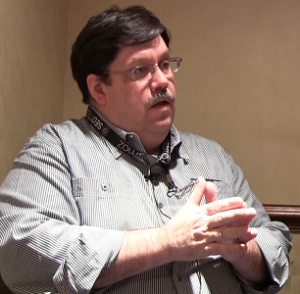
Bill Hunt
Follow OMReport on Facebook, Twitter or as to get the latest interviews fast.
Transcript
In today’s OMReport interview we welcome Bill Hunt, a true veteran when it comes to search engine marketing. Since 1994 he has been working in the business. Since then he held leading positions in companies such as Global Strategies International, Ogilvy & Mather and IBM. Right now he is founder and CEO of Back Azimuth Consulting, an agency and software company from Connecticut that specialised on keyword management. Furthermore, Bill is also a member of the SEMPO board of directors and is Co-author of the book Search Engine Marketing, Inc.
Andre Alpar
Hi Bill, so nice to have you.
Can you please introduce yourself?
Bill Hunt:
I’m Bill Hunt from Back Azimuth Consulting.
Andre Alpar
Ok. So what does the company name stand for?
Bill Hunt:
It’s a navigational term, which you use if you want to find the way back to some things.
So, we came up with this name, because we were trying to help businesses to figure out
how to find their way back to their customers, by listening to the words they were using to talk to them.
Andre Alpar
So it’s like the typical thing about our search, that it’s more like a pull channel, not like a push channel.
Bill Hunt:
Exactly.
Andre Alpar
Customers sometimes have their own terms how they think about their products. It’s not necessarily that people, the customers use the same terms.
Bill Hunt:
Exactly. On push we tell people and we want people to use terms we came up with, but not necessarily terms they use. So that was our idea – let’s look at the data and find the words, they’re using, and then let’s let them ask us and talk to them as the searcher does.
Andre Alpar
I assume, that’s quite a while ago, when you came up with the name, right?
Bill Hunt:
Yes, it actually was from when I was in the military. We used it as a way to find, sort of, where somebody was shooting at us from. That’s where the term came from.
Andre Alpar
Ok, not bad!
But do you think, everybody has understood finally, how search works? That it’s really a pull channel? That you have to use different terms rather than what you use in your ad as your tag line and so on?
Bill Hunt:
I think, intuitively people know, but we see this every day, when companies introduce
a new product but won’t even use things, that are very basic. So I think we still have a little way to go, and it’s sort of frustrating in 2013 that more people haven’t figured that out.
Andre Alpar
Are you a one man show or do you have a team? What does your organization or company look like?
Bill Hunt:
Yeah, it’s relatively flat. It’s myself obviously. We are a tool developer, so that’s what we’ve been working on. So we have a group of developers and a few other people that help us out.
We don’t do a lot of the analysis. We sort of enable companies to do it themselves, or an agency can do it. Being a tool developer, we can be pretty lean and we know what we want to build. So, fairly flat.
Andre Alpar
Ok. So what do your tools do?
Bill Hunt:
It’s a keyword modeling tool.
So you can load all your keyword data from paid search, organic search, site search – anywhere you can find information that contains a keyword phrase. We mash it all up and then we’re able to go in and you can use some segmentation functionality to say: “these words are a buy cycle; these words are an awareness cycle.” It allows you to slice and dice across that. And really, we’ve created a series of rules, that if these rules are broken, we are like really chasing anomalies in the data.
If you have a million keywords, we try to find words that are sort of out of sync, maybe…-
Andre Alpar
You’re doing PPC (Pay Per Click) for a certain keyword, but you’re not targeting with any SEO efforts?
Bill Hunt:
Exactly, these words are in paid, but they are not doing well in organic
Andre Alpar
Or they are often used in site search but you don’t have them in paid or these kinds of things?
Bill Hunt:
Exactly. And we look for those correlations and it’s very interesting. We find cases where there are very high queries on the page but not in paid search. Or very high queries on in-site search but we don’t have them in organic. Some of the other filters we have:
We try to play nice with both paid and organic. It’s the first tool that really has aggregated that data in one place. Two key things we can do with it:
First off, at the conference here I asked people to go back and ask your PPC person to give you the twenty most expensive words by cost per click.
Then take that list and give it to your SEO person and say: a) “How do we rank?”
and b) “Are these on your to-do list?”
And it’s very interesting – so far with this conference I’ve had about eight people email me back
and say that most of the words they are not ranking for and probably half the words were not even on the to do list of their SEO team. So that’s still pretty shocking that we have that kind of disconnect, and it comes because these teams are siloed.
Another two great reports that we like to do, and you can do these in Excel, is go in and find keywords that are converting well and have revenue in organic, sorted by most revenue generating organic terms, and see how you’re doing in paid.
In my presentation I gave an example where they making $79,000 in organic and $34 in paid.
And then we do the opposite, we go into paid and find your best performing words in paid and see how we do in organic, and we can learn from each other.
So we’re converting well in an organic page – what are we doing on that page that we are not doing on our paid page?
Paid is important, because we what we can do is…We have a click rate that’s high on our paid snippet, we can take that ad and actually make it our organic meta description. And so this allows us to take that two pieces of data and make them one and find these economies of scale.-
Andre Alpar
You’re trying to figure out the CTR on the certain ads and then compare it to the organic snippet?
Bill Hunt:
Yeah, well, that’s one of the factors. So let’s say
Andre Alpar
But does the tool do that?
Or is that like a task I can generate
Bill Hunt:
Yeah, a task. What our tool will tease out will tell you that these words are doing well in paid, these are your ten best words in paid, that are also some of your worst performing in organic. So the very first thing, like you said, is it a problem with our snippet? Why are we converting in paid but not organic? It’s even more true when we’re converting on organic and not on paid. That’s the one, I think, has the greatest opportunity. We have a third component with paid and organic cause we can actually see what happens, when we have paid and organic side by side. And, I think, this may have been where you were going to because let’s say in paid, we have a great offer that says: “30 percent off, if you buy now,” and organic might be: “We sell the largest set of Oktoberfest mugs in the world,” right?-
Andre Alpar
Why do you say that?
Bill Hunt:
As we’re talking to a German audience and Americans love Oktoberfest.
Andre Alpar
That’s true.
Bill Hunt:
So in our paid, we have a very concise offer and in our organic we don’t. So what we are able to do is, using site links or fixing our content, we can often take that positive ad in paid, apply it in organic and very easily shift those through. It really gives you a way to see it side by side. We’re not seeing one versus the other, but we want to get to the one plus one is three. That’s what the tool just does. It does it in bulk and most of our clients have about a million or more words and trying to do that manually is narrowly impossible.
Andre Alpar
Just a question of curiosity, because it seems like a solution for a very specific problem.
For me, it feels like it should be a piece of a puzzle of a bigger SEO solution, like one of the many vendors showing off their big SEO software suites – they should have something like that in there.
Bill Hunt:
You would think that or you would hope that.
Andre Alpar
It would make sense.
 Bill Hunt:
Yes. I think there is couple of things. One is many of the pricing models are a scale thing. We are only focused on the keyword data whereas their tools, they can go hand to hand, there’s no reason.
We actually have a couple of clients that take my tool, do all the data modeling and that and then feed that data into something like a BrightEdge or a Conductor.
What we are able to do with especially like a Conductor is, we can take the rank data and that performance data from their tool via the API back into our tool.-
Andre Alpar
And then compare that to the AdWords efforts?
Bill Hunt:
Right. And these guys do a lot and, sort of, I can see the model is that would be to do that for a million words. If you’re willing to pay all the processing power and that, then they’ll obviously do it.
But it doesn’t make sense to do it for everything.-
Andre Alpar
Alright. And the two are more like specific for certain sets of keywords
and you go like for the broad huge range of things.-
Bill Hunt:
Exactly
Andre Alpar
So are your tools like, do they explain themselves? Or is it like a part of the service that you do just
consulting how to use your tools and give people better access to what they can actually get out of the tools?
Bill Hunt:
We like to think that they do. If you come to the dashboard and it says, these words are, like I said, these words are converting very well in organic but poorly in paid, that’s fairly intuitive. We have other things that say like all of these words dropped these eight positions or these words had a ten percent decrease in revenue,
fairly intuitive. We find the biggest barrier to our tool is, that people – well, this can allow you to focus in, and we actually show people how to use it. It’s called thirty minutes to search greatness,
where in thirty minutes you can find a weeks-worth of things to do. Most people fear that, because now they know they have a weeks-worth of work to do. But it’s very focused. We’ve tried, we’ve spent a lot of time, and I think Avinash Kaushik has really been helpful to me.
He always insists on making it actionable. Everything we do, we’ve stayed away from pretty.
So it’s not pretty reports and manage reports.
Andre Alpar
Could be a German tool then.
Bill Hunt:
It’s functional.
It finds the stuff.
We don’t need to make it look pretty…
Andre Alpar
Do you think pretty would sell better?
Bill Hunt:
Yeah, I mean in America pretty would sell better.
Andre Alpar
Why not get another designer when you have like…I don’t know how many programmers but…?
Bill Hunt:
It’s not pretty as in terms of the layout, but this producing reports, this is stuff that you can’t really put in a report. Here is a list of stuff to do. You can put that into a pie chart, but it’s not actionable.
What we want to do is say: “These are ten problems you have. Now take this and go fix it.”
Andre Alpar
You mean, like a list of things you’ve done and you see the number of things you’ve done ramping up
and then that looks beautiful?
Bill Hunt:
And we can see that, we can see that part of it. We’d rather spend the time finding how to find
the needle in a haystack or the anomaly or the opportunity, because it is a very distinct group of people that have been using it. What’s nice, is that some of the stuff can be tracked into some of the bigger, especially SEO suites.
Andre Alpar
Do the tools work internationally or do you have to adapt them for certain languages?
Bill Hunt:
The interface everything is in English, but having a Japanese wife, who is also a top SEO, everything had to be double-byte friendly. So we can do any language. My developers are actually from Belarus and the Ukraine, so they understand. They build everything to be able to handle Russian and there was a mandate to handle Chinese and Japanese, so my wife would use my tool.
Andre Alpar
How long did it take to develop it?
Bill Hunt:
We are now in almost our second year of development. People are using it.
We ran through a number of things. Imagine the first thing of getting all this data and trying to mash it. We encountered campaigns that you could never fathom, meaning…-
Andre Alpar
Too big?
Bill Hunt:
Not too big. Size was never really the problem. It was the stupidity.
Let’s say, you take a campaign, I would have never – in almost 17, 18 years of search – ever thought I’d see a campaign, where a keyword was in all match types, multiple campaign simultaneously.
So we had to account for that in the database, we had to use, you know, a keyword as a primary keyword and then basically append everything else to that.
The amount of oddities we find in campaigns show us how inefficient most campaigns are really run.
That was probably our biggest hurdle, scale was never a hurdle. We used the cloud from Day One.
Our Day One Customer was people with more than a million words. A million words, 256 variables,
you can do the math – it’s a lot of data very quickly. So everything was engineered around that.
And that’s been probably one of the weaknesses – we are finding a lot of people
in the 20,000 to 50,000 word range, who would love to use a tool like this. But it hasn’t been a market we’ve been after, just mainly because people that are in that category, I think they would benefit from it. The overhead of trying to service them is that we would need to be more the consultancy, like a raven or somebody that’s providing services to people.
It’s been going faster. This conference here really showed that. My session – we had a full house, two hundred and some people. People are just now waking up to keywords. It is the essence of search.-
Andre Alpar
It’s like the beginning! It’s funny…
Bill Hunt:
It’s the beginning but, really, if we step back and think about it, to your original point:
Why don’t the other tools have this? And it’s because it’s almost an afterthought. I did a survey and I found that about 98% of all the companies manage their keywords somehow in Excel and few people build some small databases.
But in 2013, again, the most critical part of search – and we are still doing it in Excel for the most part – is astounding to me.
Andre Alpar
What have you been doing before the tool, if I may ask?
Because the tool is just there since two years, but you’ve been in search for like forever.
Bill Hunt:
Yes, I have. I have been really on all sides of it.
I started out doing search on my own business, which I ultimately sold. That led into building an agency, which was acquired by WPP in 2000. I then went in and worked with companies like IBM,
where I built the first search team…-
Andre Alpar
Like an in-house consultant team?
Bill Hunt:
I was the in-house at IBM. All the things that I did in my first agency, when I started working in-house at IBM more or less were wrong. So I rebuilt IBM in a way that made sense for us, started talking about it at conferences. Next thing you know, I had a second agency that catered to embedding a strategist in the company and we worked with some of the biggest companies in the world.
And then that company in 2007 was bought by Ogilvy.
In 2009 I basically retired from search, and that lasted about six months. I got bored and
started seeing there were still problems. That’s where I really got focused on the keyword modeling
and decided to build a tool, really for my own use. I had a bunch of blogs and sites like that and I just wanted something. Then I started realizing, that other people, other big companies could use this.
And that’s where we are today.
Andre Alpar
Alright, great stuff! Thanks a lot for your time, Bill.
Bill Hunt:
Thank you.
Recently appeared in this: