
Episode 15: Interview with Jim Boykin
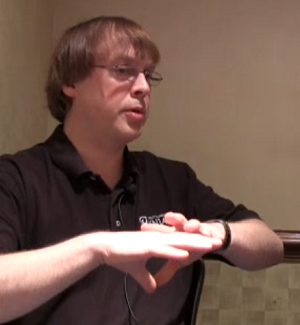
Today’s interview partner is Jim Boykin, CEO of Internet Marketing Ninjas (formely known as webuildpages.com). In recent years his company purchased other established SEO websites like developershed.com, seochat.com, cre8asiteforums.com, webmasterworld.com or threadwatch.org. Jim is actively involved in SEO and internet marketing since 1999 and held speeches on numerous conferences. Jim’s areas of expertise include, SEO, Tools, Link Building and The Panda Updates.
This interview is also available on iTunes and on Youtube.
 Follow OMReport on Facebook, Twitter or as to get the latest interviews fast.
Transcript
Part 6 of our – this time with: Jim Boykin, CEO of Internet Marketing Ninjas (formely known as webuildpages.com). In recent years his company purchased other established SEO websites like developershed.com, seochat.com, cre8asiteforums.com, webmasterworld.com or threadwatch.org. Jim is actively involved in SEO and internet marketing since 1999 and held speeches on numerous conferences. Furthermore, Jim has a quiet unique approach when it comes to link building.
Andre Alpar: Alright, hi Jim, so nice that you are here. Can you please introduce yourself, so that people in Europe, that might not know you yet will get to get to know you.
Jim Boykin: My name is Jim Boykin. I run ‘Internet Marketing Ninjas’ or internetmarketingninjas.com.
I’ve been in business for 14 years now, we used to be called ‘webuildpages.com’
Let’s see, we also own developershed.com which includes seochat.com, devshed.com, scripts.com. We own cre8asiteforums.com, we own webmasterworld.org, we own threadwatch.com, we own seoroi.com. We employ, Kris Jones, Ann Smarty, Joe Hall. Who am I missing here? Kim Krause Berg. We’ve been really having a crazy year here.
Andre Alpar: There is quite some growth, personnel-wise as well as platform-wise. So you are preparing for something really big?
Jim Boykin: Always dreaming big.
Andre Alpar: But the years before have been relatively steady, right? And there’s like now quite a boost of development?
Jim Boykin: Well, over our history, I think, in 2000 we slowly grew up. I started hiring in 2002 and 2008 we had about 50 people. 2008, Google came after us for buying links, so “You shouldn’t buy links!” (laugh). How do I say? We went down to I think 35 eventually and then we build back up over the course of the couple of years from 35 to over a hundred. We have over a hundred employees that are in our building right now. Well, the past few years, what do I say? Google hit us. I took my punch and went down to the ground and…
Andre Alpar: Back up from the knees
Jim Boykin: …came back up and it’s like “I ain’t going away!”
Andre Alpar: But you don’t have subsidiaries elsewhere? Like everybody is in one big team, in one office?
Jim Boykin: Yeah, all in Clifton Park, New York, a little north of Albany, New York. We’re all there except for, how do I say, there are three people that aren’t in the office, that work remote, but everyone else is right there.
Andre Alpar: It means that the colleagues that do a lot of consulting or like yourself, you fly a lot and travel a lot to see the clients?
Jim Boykin: To see the clients, no. Unless we meet them at conferences.
Andre Alpar: So most of your clients?
Jim Boykin: (…) Over phone and E-Mail.
Andre Alpar: Ok, so it is not necessary – even though they’re big clients, big brands – to see each other often?
Jim Boykin: Maybe it’s not worth the time to fly out and go through all that. We often do video conferences and I often use join.me to share screens. How do I say? There is lots of phone communication and when there needs to be, screen shares. I guess I just never felt the need that I actually have to go there. That’s not to say that we never do, but rarely. I mean, we’d be going to too many places. We have few hundred clients and we just wouldn’t be able to go everywhere.
Andre Alpar: Those hundred people, it’s quite a big agency, so how do you organize them? Are they organized by topic, for example ecommerce and travel or are they organized different
like content guys, tech guys, link guys?
Jim Boykin: Yeah, we have in a sense four main areas of our building. One area has the designers and programmers. There are two main teams there and a leader of those two teams as well as the leader of those and on the other side we have the link-building team…
Andre Alpar: … that now never buys links obviously.
Jim Boykin: Correct, yeah!
In 2008 it was made clear to me like ‘Thou shalt not buy links.’ I’m always paranoid that someone is watching me. It was actually, looking back on it now, in a sense I’m thankful for it
because when suddenly one day you had to figure out a new way to build links and new strategies and longtail.
Andre Alpar: They helped you to get on the next level?
Jim Boykin: 4 years ago, yeah.
I got ahead of it where people today, they are getting hit by penguin and I’m like, right now,
well we can’t do the mad stuff anymore.
Andre Alpar: But do you think they got hit by penguin because they paid for the links or the kind of links they were acquiring or was it more like, you know,the exact match anchor text that got then ‘penguined’ and then this is a different question I think?
Jim Boykin: In the end I think you are paying in one way or another.
Either you’re going directly to someone or you’re.. {interruption}
Almost all that I see, how do I say? That’s not to say that… Google doesn’t pick up everything.
What they are able to pick up is the stuff that’s in mass and can be mapped, plus there are certain signals for example, one of the types of links that can get you affected by penguin is forum links. If someone like signs up in a forum…
Andre Alpar: Profile links?
Jim Boykin: Yeah. They joined one day, they made five comments one day and that was the only day that they ever made comments. And comment number one was, you know, about one topic and
had a link about one thing, comment number two is this. Especially like…or things where there hasn’t been any talk for a long time on something, like a three year old thread suddenly has a link on it. There are all sorts of signals that Google can pick up and too many of those raises big red flags and map networks – within those are probably the ones that are getting hit by the penguin ones, by the penguin updates. So, when you ask about paying,
I think those that are getting hit or doing things that at least can be mapped or are in bulk or ticked off all these bad signals. You know, how do you get links that are natural? It’s like you can’t do the SEO stuff. You have to write the real shit to get the real links that are natural
and aren’t all going into pages where there’s going to be unnatural phrases…
Andre Alpar: It seems like for years people have been using shortcuts and now their shortcuts are not short anymore.
Jim Boykin: Correct. I mean correct.
Andre Alpar: Or they just don’t lead to the right exit?
Jim Boykin: It’s that whole balance of…you know at least with my business, people come to us and they’re like: “We want to rank high.” and usually it is, you know, the short tail phrase and you got to go through the long tail. Not always but, you know, a lot of the time. But people, people want to rank and if they want to rank, they need to get links. If they’re buying, if they are pressing buttons anywhere to get these things, they are buying the links I guess.
It’s only the natural stuff.
Andre Alpar: How do your clients pay you? Is it by the hour, the time you spend trying to acquire links for them, like trying to build link-building campaigns that will earn the links?
Jim Boykin: Yeah, it’s …
Andre Alpar: Or by that successful link that you have gotten luckily?
Jim Boykin: It’s interesting. They pay us by…We will start with the author for the website
and that author of the website is going to write academic content. That academic content we’re got to try and promote to highly-trusted old websites. Like third person writing and these academic articles trying to get the academic links. Not blog-links, but like, you know,..
Andre Alpar: The real academic university links.
Jim Boykin: …like organizations, news, govs, and other super highly trusted stuff.
Andre Alpar: Is it also sometimes successful to refer like funny content that’s like close to your client’s topic?
Jim Boykin: Well, the same author is also going to blog.
Andre Alpar: Ok, ok.
 Jim Boykin: And the blog is written in first person:
“I woke up this morning and etc.” And that’s to build up the following around that person. It can be the funny stories or possibly could be an infographic one day. But they’re going to also write in third person and they’re also going to have social accounts connected with that person and that social is going to, you know, promote the third person stuff, and the blog stuff and there are also going to look at the other influencers and everyone within that industry and start making those connections, and start trying to get the feedback from those and the connections are going there because, you know, a lot of where Google is moving to has to do with this authorship. So we now have this author. If you can now, let’s say, also get other people that write, so part of what we do too is maybe we write to an educator and say “Hey, Prof Bob, you know, here is something that we think you should link to this page to help out people.” And Prof. Bob says “Hey, you’re right! Great article !” And then we say “Prof. Bob, would you be interested in writing for this brand?” You know part of what we do is connect people to brands. So if we find trusted people we ask them if they are willing to write and if they do, let’s say even just one a month or if they want to write like one a week or something, but we start adding them to the blog. And then them to the blog as well. And then, if we are writing news things as well with all of this. So, now we’re picking up all this trusted author things, because they’re also going to have a profile on the page and we’re picking up all these real people, real trust, being added to our site, to these pages, that now also can attract real natural backlinks without even having to ask people.
Andre Alpar: Sure. They’ll link to their articles that they wrote on your client’s page, right?
Jim Boykin: Yeah! And they going to tell their social friends and, you know, if we get a handful of people
that now start writing for your site, we can then also submit your site to Google news.
Now you can be the news for your industry.
Andre Alpar: Sure, but Google news has been quite strict with letting in new sources these days. I remember old times when I had half a dozen in there.
Jim Boykin: Correct. If your writers are real people and these a real profiles and these are real people and if you have, like, a college professor and another highly trusted guy and another highly trusted guy and then a handful of trusted people and a part of what you writing is good up-to-date content. When you submit to Google news, there are different categories of what kind of site that you are. So that’ll say the name actually next to it and for a lot of them the type of site is going to be a blog. But it’s like, yes, it’s very strict, But you can create the real thing! Again, it’s not gaming the system. The future of everything is moving towards authors
and connecting real people to your site and that’s part of what we can do for people.
For $5,000 Dollars a month, well, how do we charge? Well, you’re going to get some trusted links, you’re going to get some articles, you’re going to start getting these other things, you going to start to possibly bring in some others. We’re going to be setting up social accounts, we’re going to be like building up your first author.
Andre Alpar: How do you scale that? It’s not so easy organization-wise. I mean, you have to have more and more people, the more and more clients you have, because it’s just additional work, right? It doesn’t scale like a software tool?
Jim Boykin: It does scale, because once we start up your first person. Part of what the first person is gonna be doing…
Andre Alpar: It’s like a boost in the beginning?
Jim Boykin: They are going to be looking to bring on other real people to write for you.
Andre Alpar: Ok, so you just try something initial, like an initial set-up phase?
Jim Boykin: Getting more new people to write for you doesn’t cost us any time. And now getting real people to now write for you. I don’t have to write the content. I don’t have to promote the content. They are going to promote the content. I’m only promoting the brand.
Andre Alpar: So it’s like a self-lifting system?
Jim Boykin: You’re going to sell them a T-Shirt, you’re going to send them a camera and say “Start taking some videos!” like “You’re a brand advocate!” And us as a company doesn’t. We just make the connections: brand – real people.
Andre Alpar: It’s quite a unique approach, right? Is that kind of your invention and do others do it too that way?
Jim Boykin: I don’t know anyone that does this.
Andre Alpar: Ok. It’s quite unique, I really like the approach. I guess it’s really what would make Google happy, right? I mean that’s really what they want. So you just made a service out of it.
Jim Boykin: I attach real people to your brands and they are writing one blog post a month.
You don’t to put links. That’s the whole thing. You can get out of the system. You also can tell your writers here is a whole bunch of topics. And you can run it also to keyword research and find the phrases that may be not the brand converting phrases but informational stuff.
You helped to make the tag line, like “A hundred and one bla bla bla.” We also give our writers a whole list of “here are some possible topics to write about…” And it’s like “Oh great! This sounds cool!” And it’s like you’ve already created the title which is after you have done the keyword research, you have created the title, these things are going to rank too. And when they rank, they get found. And when they got found, they get backlinks and mentions.
Andre Alpar: So how do you report…
Jim Boykin: You don’t have to build links anymore! You are done! And you know what? You’re as white hat as …. shit! Yeah, I connected real people to the brands.
Andre Alpar: How do you do the reporting like an average agency would report like
– I don’t know –the man hours spent or the links acquired or how would you report?
Like the number of articles that you have pushed or the outreach you have done?
Jim Boykin: They see the articles, because they see everything that we have published. They see all the
backlinks that anything has gotten. And that’s, you know, there is nothing paid, seriously.
There is no network, there’s not like “Hey let’s pop the rollerdex!’’
It’s literally writing to people and that’s very minimal. And then they see all the articles written, they see all the social stats for everyone in the articles. You know, we started out with a huge report for clients. For most of clients we do a huge report, analysis…
Andre Alpar: Like what? What can be done better on this site? Like an on-page analysis or kind of a thing?
Jim Boykin: We analyse the on-page, the backlinks, the social, the technical, like every aspect. The different teams are analysing those areas. Basically the reports are done in a way so that it’s like: Here is a problem, here is a link to it, here is a screenshot of it and here is the solution to the problem, like this is exactly what you need to do. And then the others are listed in the end of all the priorities under everything and it’s like you can just hand that to someone and like..
Andre Alpar: Do this. Now.
Jim Boykin: Yeah, like you can hand this to your programmers, they understand that. You can hand this to your designers, they understand that. You can do all of these things. It’s like everything that they can do with their resources – go ahead and do! It’s all going to help and then anything they can’t do, well, we do have a programming team we have a design team, we have a social team, we have a technical team, of course we have the link team, a the content team and anything they can’t do we can do as well. I mean, we look at everything. A lot of time is based on that report. We may say also, well here are some other things that if you can’t do them, you know, we can do this for you, it costs this amount each month. We can do this and this…
Andre Alpar: So, additional services?
Jim Boykin: Exactly. So it is not just this whole author thing that I explained.
Andre Alpar: It is like a slightly standardized start and from there on it branches out into different kind of things?
Jim Boykin: Here’s 30 ideas for infographics, here’s 20 ideas for widgets, here’s all these other issues and bla bla bla…But there’s a whole bunch of other stuff in there, a lot of cool stuff.
Andre Alpar: And when you were doing your presentation earlier today, I had the feeling there’s like of more of an entertainer there on stage rather than somebody, you know, passing out information. Is that like a certain mode that you have when you do presentation or is this just like the mood of the moment?
Jim Boykin: I put together 80 per cent of that presentation yesterday. I don’t know, really off the cuff.
I moved stuff around so much and everything was… So every time I hit the space bar I wasn’t sure what the next slide was going to be so it was kind of a surprise for me as well!
Andre Alpar: Do you know this PowerPoint karaoke concept?
Do you know that?
Jim Boykin: No.
Andre Alpar: There are people who meet up and they have different PowerPoint files, of all kind of different topics, and then each person goes up and has to do a presentation he has never seen before. So, they actually do institutionalize what you have done today. So they do it on a topic they don’t even understand. They just give a presentation, and then later on people decide who has done the best presentation. So it’s power point karaoke. So you sing along but…
Jim Boykin: It’s really cool!
Andre Alpar: So probably that’s something you should train within your company so everybody will be able to do what you have done today.
Jim Boykin: I got some funny side stories, but, you know, I do the presentations myself, so that’s why they look like, you know, how do I say, I’m still using PowerPoint and I see all the newer ones and I’m like ‘’Yeah, I do them myself and I’m usually trying to do a different one every single time’’ so it usually ends up like the day before “Oh shit, I got to do a presentation,” but at least it’s a different one every time. I’ve seen so many people, where it is like, you know, I see them every few months or whatever, it’s like “I already saw that presentation”.
Andre Alpar: So, how many trade shows are you doing a year?
Jim Boykin: I do about one a month.
Andre Alpar: One a month, ok, that’s not too much.
Jim Boykin: That was part of my dream with the business. The first show that I went to was in 2002 and I won the free pass and at that Show I remember looking at the people on stage, it was ‘Search Engine Strategies 2008,’ and looking at them and being like “Wow! If I can become a speaker one day, that would be my excuse to be able to do all the travelling around the country or the world or whatever…
Andre Alpar: Do you really travel? I mean, do you take an additional day off at conference place just to stroll around and meet people?
Jim Boykin: Almost always I go to the conference, you know, for the three or four days and then I do a national park for two or three or four days right after that.
Andre Alpar: So it is always a bit of work and vacation.
Jim Boykin: I work on both ends. I do the work and then I do the vacation.
Andre Alpar: Sounds good.
Jim Boykin: This one’s in New York where I’m really not doing it. But it’s like my backyard, like I hopped on a train to come here.
Andre Alpar: Thanks a lot for your time, Jim.
Jim Boykin: Thank you very much.