
Episode 14: Interview with Bas van den Beld
Today’s interview partner is Bas van den Beld, founder and chief editor of State of Search, one of the leading websites when it comes to search and social media. Bas also writes for Searchengineland, Searchenginewatch and his own website basvandenbeld.com. In the beginning of this year he was voted amongst the Top Influential Marketers in the UK.
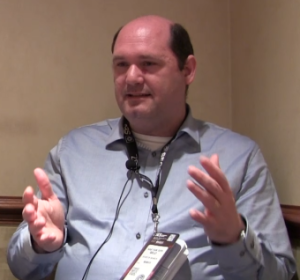
Bas van den Beld
This interview is also available on iTunes and on Youtube.
Follow OMReport on Facebook, Twitter or as to get the newest interviews fast.
Transcript
Our reaches its fifth edition. This time we spoke with Bas van den Beld, founder and chief editor of State of Search, one of the leading websites when it comes to search and social media. Bas also writes for Searchengineland, Searchenginewatch and his own website basvandenbeld.com. In the beginning of this year he was voted amongst the Top Influential Marketers in the UK.
Andre Alpar: Thanks for your time.
Can you briefly introduce yourself?
Bas Van Den Beld: Yes, of course. I’m Bas Van Den Beld,
I’m the founder and owner as well of Stateofsearch.com,
I’m a professional speaker, trainer and consultant.
Andre Alpar: Alright. So- Is the trainer always a good player or is it like when you look at sports, sometimes
there are trainers who are really good trainers but they’re not such good –
Bas Van Den Beld: -players, yea –
Andre Alpar: -players, and the other way around. There are sometimes players who try their luck
being a trainer and it doesn’t work out.
Bas Van Den Beld: I don’t think necessarily that a trainer has to be a good player as well,
The trainer has to understand the players though.
and it definitely helps if the trainer knows how to play the game.
But he doesn’t have to be a top player.
Andre Alpar: Ok. So, do you think.. you know you as a consultant
or maybe us as consultants –
Are we spoiled because we don’t have the problem of
really implementing the things that we suggest, or we can’t fight the
… kind of – the customers fight that they sometimes have to do internally, especially when it comes to
SEO and Social Media sometimes?
Bas Van Den Beld: Yeah, and I think that’s one of the reasons why consultants sometimes don’t have the best name to it.
It is, of course it’s easier if you don’t have to actually do it.
You just tell what you think should be done and then you’re outta there.
Still I try to get as much information from the people I work with,
the people I train to actually understand what they are doing
and I’ve actually found a way where I can make it that the organization
understand itself better.
Which is just that they train each other as well. So I’m a trainer
and I facilitate that they train each other which makes…
Andre Alpar:– So it’s more like a communication-facilitator or something –
Bas Van Den Beld: Yes and no, it’s partly –
Part of it is the training, so some of the stuff is new for them.
But I don’t know if you know the principle of Nelson Mandela, what he did
in Robben Island with –
Andre Alpar: – Please let us know. I’ve been in Robben Island but I don’t remember.
Bas Van Den Beld: Ok. Well Robben Island is the prison in South Africa
And when they were held in prison there, they wanted to learn more –
Andre Alpar: -Yes –
Bas Van Den Beld: – the problem was that they only could get out of the
cells for like half an hour of the day or so, or an hour maybe.
So what they thought of was an idea that they would teach each other.
But they were like, not switching cells, so they were in cells next to each other.
So they were teaching each other through the walls of the cells.
One of them had a book, so he explained it to the one next to him,
and then the person next to him had to do it to the next person.
You know, the game when you have to whisper –
Andre Alpar: – exactly –
Bas Van Den Beld: Well, that goes wrong because people don’t listen.
But what happens if you train people
and you tell them how to train someone else
on the topic they are about to get knowledge on,
they listen more carefully.
And then they go and train the others.
And then something interesting happens, because then
they start communicating with each other about what they can and cannot do within the organization.
So they help each other actually to understand each other.
And I’m always there, so I’m learning as well. So each training-session
I don’t just teach, I learn as well.
Andre Alpar: So, is it, like in your case,
that in some point of time,
you made the customers, or your training-customers, so good that they don’t need you anymore?
So they’re kind of, you’re kind of destroying your own customer-base to certain degree?
Bas Van Den Beld: Well, I think if –
Andre Alpar: A bit dramatic, sorry –
Bas Van Den Beld: – Dramatic yeah.
But if you’re a good trainer, that should be your aim actually.
It should be your aim to not be necessary anymore. Because if you do a good job on training, they will understand and they’ll do it right.
And I’m not into training to get more training; I mean I’m into training to get them to understand the principle.
Andre Alpar: Ok.
Bas Van Den Beld: And there’s enough to train in the world.
You don’t need to hold on to one client.
Andre Alpar: Sure. So can I just understand, so I know “Stateofsearch” as being like a huge Blog over in Europe,
basically you’re discussing everything that happens and of course abroad as well.
But you’re a One-Man-Show or are you like an organization?
Just out of curiosity…
Bas Van Den Beld: Yeah I know, it’s my Blog,
I also run it, so I’m the chief-editor of it.
We have at the moment about 30 – 35 people writing for it.
And this year we set up an editorial-team as well,
so we have six people who also look at the content, we have a person who is responsible for all the event-stuff,
a person who is responsible for all the tool-stuff,
so I don’t have to do it all alone, anymore.
Andre Alpar: Ok. But it’s something completely separate from you’re,
work as a speaker and work as a coach?
Bas Van Den Beld: Yes, it helps me
with my profile and it helps of course understand what’s going on,
and what we do try to do, when writing, is one of the assignments bloggers always get – bloggers don’t get that much assignments, but one thing they need to think about always is, ok so, who is this for
and how does it help that person getting forward, and when we talk about like
developments within the industry there is always the question: So what?
So what does this mean? So, Yeah, it’s nice that we have a new feature on Facebook –
Andre Alpar: – what’s the conclusion? –
Bas Van Den Beld: what’s the conclusion? What can you do with it?
There is an overlap.
Andre Alpar: Ok. You’re also a lively preacher of the Social and Search convergence, right?
So when did you say, ok, wow this is so big, this is my focus-area.
Because I can’t recognize, because, suddenly it has been there, it’s like wow the dominant topic, Bas is always talking about it, its’ like always pushing it, pushing it pushing it, so..
 Bas Van Den Beld: Yeah, I’ve been actually pushing it for the last three or four years I think.
The interesting thing is, that I’m originally an History-Student, so I learned about what went on in History. And I’ve said in several of my talks, if you went back at History, we’ve been doing social and search for ever. When you’ve been in the Roman Era, and you needed an answer, you went to the oldest person in town and you asked him the question. And that’s search.
And actually, Jesus is a good example of who has done social, right? With twelve followers,
and then he got his message across to a lot of different people.
So I’ve always had like a different vision on the industry as most people had.
I’ve never been too tactical, although I’ve been trying to look at strategical.
So I kind of notice when social came much more on, that the behavior of people was the same as offline. And I figured that if you look at people and you take that behavior and you translate that to what’s going on online,
you see patterns. And I noticed that Google saw the same patterns.
And actually, I was lucky to predict what Google was going to do with Google Plus
before they actually launched it. I was at SMX London
and I explained this is what I think is going to happen. And actually three months later that exactly happened. So, that was lucky. And so it wasn’t like one moment.
It’s like taking my vision on how the world works and translating that to online if you see patterns.
Andre Alpar: What do you think about Facebook Graph-Search?
Do you think that people already understand what they can do with it? –
Bas Van Den Beld: – Absolutely not –
Andre Alpar: – Because I permanently see examples and I think, “Oh I can even do that with it,
whoa that’s scary”.
For me it’s rather scary and I’m still need to experiment to figure out what I can actually do with it.
And think of use-cases and the use-cases are so much different than we’ve learnt in a dozen years of using Google, right?
So what’s your take on that?
Bas Van Den Beld: Yeah, it’s completely different. Well, it is scary, that’s for sure.
I’ve done searches where I can find people working on a University who like guns for example, or people who are working for Facebook and like porn.
You can get information about personal people, which is kind of scary.
So for marketers
it is interesting, because you can find out a lot of information about who’s on Facebook and how they are responding to things
and you can make like connection between different topics and see that if you talk about one topic than another topic will show up for them as well, because
those people are influencing another topic.
So when it comes to influencing people as a marketer,
I think it’s an interesting tool.
When it comes to actually using it as a Search Engine,
I don’t think that people will be looking for specific answers, as they do on Google, so it’s not a
direct competitor of Google Search,
because I don’t see myself looking for a new watch on Facebook, for example,
or a comparison of watches or shoes or whatever.
But you do see that people have interest, they want to be in groups.
So they want to have connections with similar people who have similar interests.
And I think that is something where Facebook Graph Search really can help.
Andre Alpar: Two cases for you just to judge, you know, what would be the right Search Engine.
Let’s say if I’m looking for “good music” as a keyword, you know,
then I think, you know, that would be so stupid to type into Google,
but it would totally make sense to try at least search it on Facebook in the right way but people just don’t know yet.
And another thing is, how what, I mean we are here in New York, if I’m looking for hotels in New York
on Google, I see like 5000 results. Is that still really helpful
or should I, you know, probably try Facebook?
Bas Van Den Beld: The travel is a difficult one actually.
I think, to be honest, if you would do a search for a hotel and you want both the hotels and
knowing that some of your friends have been there,
I might actually go to Bing. At least in the U.S.
Which sounds maybe weird because Bing is not doing too well,
especially in Europe it’s a really small, well you know of course.
But Bing knows how to combine the two. So you have – If you do a search for “hotel in New York” on Bing and you are in New York, you have to use the U.S. Bing Search Engine for that.
You can see in your side bar, you can see which of your friends,
whether or not talk about that specific topic and that helps.
Andre Alpar: Ok. So also for the music suggestions, like what new music to listen to, you would also choose Bing, or would you do try that on Facebook probably?
Bas Van Den Beld: No, I would try, probably Facebook. But –
I think it’s a combination of things actually. It’s how Facebook for example connects to Spotify, so
it’s not about one Search Engine anymore. I don’t think people just choose one Search Engine.
The problem with Search Engines, or at least the main Search Engine, if you look at the list, Google is the biggest Search Engine.
Spotify is a Search Engine,
Youtube is a Search Engine, Facebook is a Search Engine, Twitter is a Search Engine, so
it’s actually a completely different playing-field.
People are using different types of Search Engines for different types of searches, like for example good music.
The good music part will probably be more on the Social-Type Search Engines.
And where they will buy the music is more the Google-Type Search Engines.
Andre Alpar: Ok. So you also travel the world quite a bit as a speaker.
Is there a continent you missed out yet?
Bas Van Den Beld: Asia.
Andre Alpar: Asia, not yet? Wow.
Bas Van Den Beld: No I’ve not yet spoken in Asia. And Africa.
Andre Alpar: Ok. So what are differences that you see and recognize, I mean
you’re not just there as a speaker, you’re also listen to what people – are you know, talking and doing in other in other presentations. What do you see? Are there differences that exist?
Bas Van Den Beld: Well, I see a lot of cultural differences.
So people being more – Like in the UK or in the Netherlands they are more easy when it comes to – well the Netherlands has as two different ways, but when it comes to privacy issues,
I think Germany is much more difficult when it comes to privacy issues.
So you see the cultural differences when people are talking.
I also see that in the U.S. there’s a lot more tactical talk instead of strategical talks –
Andre Alpar: – where’s that in…? –
B – in the U.S. I think there are people who like tactics instead of more strategy.
Andre Alpar: Ok. I’ll teach you this and this trick to do and then that’s a good presentation.
Bas Van Den Beld: Exactly. You see a lot of people responding on that like, “Oh that was good”.
Whereas in Europe people tend to think more strategical, I think.
Andre Alpar: Ok. So you really adapt, like if you have like a certain content or a certain storyline you want to teach, you would really adapt it for the U.S. guys –
Bas Van Den Beld: – Absolutely. I never give one presentation twice.
I always adapt it.
Andre Alpar: That’s sure. But you would also, you know, try to aim for a different level, you know,
between tactics and strategy?
Bas Van Den Beld: It depends on the audience, yes.
It’s not as if I say, ok if I go to the U.S. I’m going to do all tactical stuff.
What I would do is that if I go to the U.S and I speak, I would explain more that I’m talking about strategical stuff and the difference between strategies and tactics, so that they will know what to expect.
I’m not going to adapt, so that they will just get tactical stuff. They can get that somewhere else. I think they need to know about strategical stuff. They just need like more of an intro to explain:
Listen, we are talking about strategy elements here and this is why we are talking about strategical elements and then you go into topic.
Whereas in Europe you just go into the strategic stuff.
Andre Alpar: And then who helps to it break down in Europe?
How they do it, how do they break it down to the tactical level? Or is it… do they do it developing themselves, because it’s…
Bas Van Den Beld: Well, it’s a different, of course my presentations aren’t like one-off, you need to…
it’s a starting point. So you need to get more information after that. So that’s where State-of-search for example comes in,
you can get more tactical stuff on there as well.
Other speakers, at the conference, you don’t want just strategical talks, you want tactical talks as well. So you try to
connect the several talks to each other.
Andre Alpar: Ok. Thanks so much for your time Bas.
Bas Van Den Beld: Thank you.