
Episode 19: Interview with Ekaterina Walter
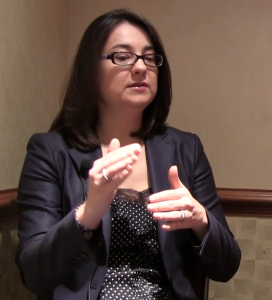
Today’s interview partner is Ekaterina Walter. For eight years Ekaterina has been known as the Social Media Manager for Intel. Just recently, she has left the company, which drew some attention in the scene, to become CMO and partner of Branderati, an Influencer Marketing agency. Furthermore, Ekaterina Walter is known as the author of the book “Think like Zuck” and counts as one of the leading figures of Social Media Marketing. At the time this interview was done, Walter was still working for Intel.
This interview is also available on iTunes and on Youtube.
 Follow OMReport on Facebook, Twitter or as to get the latest interviews fast.
Transcript
The last interview of has a couple of special features: So Ekaterina Walter is the first interview guest that does not have a SEO background but has been known as the Social Media Manager for Intel for eight years. Just recently, she has left the company, which drew some attention in the scene, to become CMO and partner of Branderati, an Influencer Marketing agency. Furthermore, Ekaterina Walter is known as the author of the book “Think like Zuck” and counts as one of the leading figures of Social Media Marketing. At the time this interview was done, Walter was still working for Intel.
Andre Alpar: So hi Ekaterina, so nice to have you! Can you please introduce yourself and what you do?
Ekaterina Walter: Hi Andre, yes – Ekaterina Walter – I lead the social media strategies and initiatives for Intel. We’ve been doing social – and integrate it into all aspects of marketing – for the last five years. So I’ve done everything from setting the global strategies for all of our social networks like Facebook, Twitter, YouTube etc. etc.; last year we started Pinterest to measure our results in the right way and then last year we started doing more work of integrating our social strategies with our paid strategies because we found that the amplification effect is so much bigger: So anything from training our marketers and employees around the world to work in our geographies and business units to integrate social in a right way.
Andre Alpar: Ok, wow. It’s a huge task to be tackled. So where do you start – is it more a B2B communication you’re doing there because I mean: It’s not like I’m consciously buying a computer with an Intel chip, I am just buying a computer. So, on the one hand you could think that the stuff that you do is more B2B and then when you start mixing social media and B2B areas everybody is like “ah, does that really work”?
Ekaterina Walter: Right.
Andre Alpar: On the other hand, you’re doing consumer-oriented ‘regular’ advertising, so I assume that the social media has to do that too.
Ekaterina Walter: It’s both. It’s both. So, there is… Some of the communities that we have actually work for talking to our consumers. The reason is because I don’t believe that there is a huge distinction as far as it comes to being engaged with customers digitally of B2B to B2C. I know the tactics are going to be different; different networks and forms that you’re using for that are different and maybe advertisers’ strategies are somewhat different, but the reality is: social allows us to humanize our brand, and what allows us to do is that it allows us to be more P2P versus B2B or B2C. So it allows us to be Person2Person. So if I run a huge IT-organization, and I try to look for an Intel server or computers with Intel chips, I’m still that person and even though that’s my job I still engage with brands on Facebook and Twitter as that person. So driving your communications and your marketing strategies that are focused on people versus brand or really segmenting them for B2B and B2C isn’t exactly a clear cut line any more. So we do both, but we do use some networks like LinkedIn and to target more of decision makers, opinion leaders, IT. We also have different separate forms for talking to developers and different programs but we are trying to encompass as many people as want to talk to us about our brand and our products and our big community.
Andre Alpar: So, a huge company like Intel: How many Twitter accounts are there that need to be managed?
Ekaterina Walter: Right, great question. So Facebook we have 27 Million fans in over 50 countries so that makes it about 40 pages.
Andre Alpar: So one account per country?
Ekaterina Walter: Yes, it’s about that. At least, that’s our strategy, that doesn’t mean that’s a good strategy for everybody else, but that’s what works for us and make sure that it’s localized in the right way but we don’t defragment our fans. Very similar with Twitter, not the same, but very similar, we have contract accounts and we also have accounts that are focused specifically on particular audiences, especially if we know that the audiences are very highly engaged on Twitter. So you would say official accounts probably about 35 to 50 across the world. So it works very similar for a lot of our networks.
Andre Alpar: You can probably give us a specific example for those accounts that are specialized on a certain community?
Ekaterina Walter: IT for example – you know IT at Intel. Our IT-organization is very engaged socially. They put out a lot of white papers, a lot of demos, a lot of content that’s specifically focused on IT audiences. And some of the content is fun and could be adapted to consumers and they want to see it’s like different infographics or videos but a lot of this content is so in-depth and so technical that it would not work.
Andre Alpar: For a broader audience it would be too confusing.
Ekaterina Walter: So we do cross pollinate or cross promote every now and then but we don’t do it with specific accounts like that.
Andre Alpar: So if it’s something that regular people could also understand then it’s probably pushed from the IT account to the US account?
Ekaterina Walter: Yes, at Intel Global Handle, exactly.
Andre Alpar: So how do you measure the success of whatever is done? Is it thinking more in terms of regular advertising, so you’re thinking and talking about reach with the people and heading the departments or is it more like in a transaction business, where you’re thinking of: Is there some sales or lead gen or anything that’s happening to really hardly measure results?
Ekaterina Walter: At Intel, a lot of what we do is sell-through, not sell-to. B2B is always harder to measure like that. So a lot of our efforts focus on raising brand awareness. But that said, we are not oblivious to much sales we drive or how much buzz we create because I think, the reality is if the brand is on top of mind consistently, and there is constant buzz and constant conversation about the brand – if you are on top of mind and you walk to the store you always think: why don’t I buy systems with Intel inside versus somebody else. And so brand awareness is one of our critical goals, but the way we measure it, we measure everything. The way we measure it – so if we look at our communities we look at different things: growth of our community is one which is more of a vanity metric but it’s still important. We want to know how big our community is but what’s more important to us is engagement. How much people engage, how often, who are the ones engaging the most (and that is one of the most critical numbers for us). We talk about reach – how many impressions we get, how many people are actually seeing the message, how many people fall through based on that. We also look at demographics and who we’re engaging with, because different communities are different, right? So you would have different demographics and different age groups who have different interests. We also look at how’s our organic sort of communities and organic exposure interact with paid and we try to have that comparison as close as we can; so apples to apples. And we actually designed our very own custom point system within Intel that talks about: If they’re taking these actions with paid media or with our paid content – those different actions have different weight – it’s the same here on the social sides. “Like” is way lighter than “share” – if a person shares the content, it travels further, so you kind of assign different weight systems. And look at comparing apples to apples verses, “Oh we’ll measure this separately and that separately”. And you report it out to management that way.
Andre Alpar: So how does social media work on an organization level: Are there people in the specific country managing the accounts? And the several people managing the accounts – they meet once in a while either virtually or in a certain place? How do you do that?
Ekaterina Walter: There are different models how people sort of activate anything new that comes. So like social media is sort of new. And moving your budgets from traditional to digital is sort of new. One of the most used models that we use is called ‘Hub and Spoke’. So we have corporate marketing groups sitting in the center and we have a small team there, so social media, centre of excellence… and we have an integrated media team now where we merged the social media team and paid media team – we call it, integrated media. And what we do is we set directions. We don’t try to put people in the boxes much, but we set policies, guidelines, directions for the strategies. We set directions for what we want to do with our communities, how we want to grow, where we want to grow.
Andre Alpar: Your targets and ideas of what could be done?
Ekaterina Walter: Exactly, and then we take those directions to different business units and different geographies. But at the same time, we actually work on our global accounts. So @facebook.intel, @Intel on Twitter, Global Pinterest account etc. and we try a lot of new things. We try a lot of new things organically, we try a lot of new things from paid perspective and we do this constant AB testing and so what we come out with is optimization techniques we tell our geographies and other accounts managed locally that this is the results and this is what works and we have constant “think meetings” where people who own social communities or people who do different other functions and we make sure that we set infrastructural ways to in place, metrics and give them guidance on what we are sort of measuring, how we’re doing that, so they don’t spend too much time learning that. And so we all – at the end of the day, come together with the right metrics, with a united approach and unified metrics.
Andre Alpar: Is there probably something that you can and want to share that really went different than you expected – something that went really bad even though you thought that would really be a great thing?
Ekaterina Walter: You know not that bad, we do have some content that doesn’t perform well. So we measure drill time, we use multiple tools and also native tools, let’s say Facebook. We use Facebook Insights, we also use Page Lover, and it’s a very good tool that gives a ton of other data that Insights doesn’t give you. And we look at in real time and every week, if not more often. We look at it and we’ll go: okay this content doesn’t perform very well or the feedback on that content – either there is not much of engagement, or the feedback isn’t really that positive. And then we look at the content that does well and we look at little ways to optimize it, do better based on the learnings we have but also: Should we push more of this content versus that? We also ask people what they want to hear, and that’s what brands are missing. You don’t reach out to your community. They don’t say: Hey, you are our community; we respect you, what are the things that you want to see from us? You’ll be surprised at some of the answers sometimes.
Andre Alpar: Because they are so good?
 Ekaterina Walter: Because they are surprising. So you know how all the studies say if you look at a lot of studies they’ll say that people “fan” brand pages on Facebook because they want free stuff. A lot of studies say it’s one of the top three reasons. Our community in the past five years consistently, when we asked them questions all the time, told us that what they want to see from us is the product news and they want to be the first to know things that the market doesn’t. So we are getting ourselves in the habit of if we’re having a new fun TV commercial or something like that we post it first on Facebook at least 24 hours before so that our fans get the advantage of that. But we did have things that went bad, actually. Several years ago our Facebook page got attacked; another two years ago we had a crisis.
Andre Alpar: What do you mean by attacked?
Ekaterina Walter: Well, it was attacked by a group of people that didn’t like how particularly legislature was doing even though we it didn’t have a direct impact on that legislature. I was managing the page back then, it might have been probably three years ago.
Andre Alpar: So they were commenting on the page permanently negative stuff?
Ekaterina Walter: They tried to take over, so there were a hundred people and they got together and they started posting the same thing over and over and over and just totally… the same thing and taking over that page.
Andre Alpar: It’s like spamming the page. Wow.
Ekaterina Walter: Exactly. Thanks for saying that. As a brand it’s probably – like every time I say spam people go: “that isn’t spam, that’s a legitimate issue” which it is but we don’t impact legislature the way some people think we do. And that was way a bigger issue than just putting it like that, it takes hours to talk through different issues – it’s just not that easy. It’s very complex. So our fans were really – it’s interesting – our fans jumped in and tried to take the page over and started talking technology and said: “Listen, this Intel page. This isn’t the proper place to talk them about it.” You know, we offered the group a chance to talk face to face. They didn’t take it. They just said: “All we want to do is come talk to us on TV”, and we’re like “No, if you want to talk about this issue let’s sit down and talk.” And so they thought the best approach would be to take over our social properties. It lasted for probably about a week and it died down. But we did everything humanly possible and we tried to manage the page as best as we can, but our community got mad because this was a forum for them to talk about technology and things they love and suddenly people are trying to take it over.
Andre Alpar: But didn’t the rest of the fans jump on those hundred – and then it gets really ugly because there is so much negative energy there, and you want to do the total opposite on your page, right?
Ekaterina Walter: They did. Exactly. And the thing is we actually had to ask our fans to tone it down a little bit because according to our moderation guidelines, You know, you can express your opinion whether it’s positive or negative and that’s fine, we won’t delete your posts. But if it’s a little bit abusive and inappropriate and not respectful to other members even though they are trying to do something we don’t like with our page, we still have to be respectful towards that. But you know I did things like shut down the ability to post comments on our page for a couple of hours and I was very transparent about it and I said listen …
Andre Alpar: …it’s getting out of hand, let’s calm down a little bit…
Ekaterina Walter: … Yeah, we need to take this forum to somebody who actually can talk about it. I managed this page and I don’t know much this issue, you have to talk to our legal team and so we got deemed a little bit for not knowing what social media really is
Andre Alpar: Which I strongly doubt.
Ekaterina Walter: They still can comment, they still can comment but they cannot post originally on our page and start new threads, ‘cause that’s what they’ve been doing. But they still have the ability to comment on them and have conversation with us. But it didn’t work, so we reopened that and I kind of apologized because maybe it wasn’t the best approach but at the time it was a good decision, but it doesn’t help right? I can openly talk about things that worked and didn’t work but the reality is: That what you come against when doing social media. It’s so personal to people that you see the good and the bad but there’s so much more good out there, so many more benefits.
Andre Alpar: Sure. So, do you do anything different now that would keep something like that happening again?
Ekaterina Walter: Well, it can never not happen.
Andre Alpar: – Because if somebody makes a mistake they associated it with Intel?
Ekaterina Walter: That’s fine. We actually have people reaching out and they’re starting their posts with “I fully expect this post to be deleted, but this is my opinion”. And we actually come back and say: “Listen, let’s jump on the phone and we’ll explain it to you and usually they do and come back and say “We fully apologize, we didn’t understand the issue in the right way”- and huge kudos to Intel to actually jump on the phone and help us understand. And even though I am nobody; I am not press, I am not media, I am just a regular guy. So, we had instances like that that definitely showed that we do care about our fans but you can never prevent that from happening. McDonalds for example they always have certain groups actually attacking their social properties for multiple reasons and they live with that every single day.
Andre Alpar: There’s more stressful jobs than yours in social media…even worse.
Ekaterina Walter: Yeah, but we love our fans and we love our customers.
Andre Alpar: I don’t doubt it.
Ekaterina Walter: It is just an amazing platform for us to engage with them. I wouldn’t have it any other way.
Andre Alpar: Ok. Do you probably have any exotic story to share from one of the other countries where you do have your social media presences? Where you would think, you know, wow that’s a lot different in social media than here in the US?
Ekaterina Walter: You know not that many actually. There are interesting ways people view what’s appropriate and what’s not in different countries right, so if you post an image of a half-naked person it’s okay in some countries where it’s not going to fly in others. So there is definitely cultural differences.
Andre Alpar: One of your country social media managers once posted a picture like that and it was okay for his country but you would never have done that – something like that?
Ekaterina Walter: Well, yeah, we advised them not to do it because at the end of the day we kind of understand the cultural differences but it isn’t the right way and it might be some baked ad by somebody else, not Intel necessarily right – and they’ve been sharing a particular article that had that image accompanied in it, I don’t know – there is just different things.
Andre Alpar: So it did catch up in that country?
Ekaterina Walter: Not so much, we just kind of called them and said, “well, this might actually be an issue”, so we tried to catch it as much as we can. Just like this thing that’s happening with Ford right now. An agency posted something they shouldn’t have been or ideas in progress that wasn’t even approved by Ford. And instead of not taking responsibility, Ford has taken responsibility and was are saying, “we going to do everything in our power to not make that happen again in the particular country”. And it’s a right approach to take as you work with that agency, both parties have responsibility. But you know stuff like that will continue to happen. The best thing that you can do, and we do it continuously, is educate your people. Have specific training for the social media practitioners which talks about: “Here are some of the legal ramifications, here is commonsense that you need to be using, here are additional ideas”, and it’s just a really quick – besides all the other classes we offer – but this one in particular is a very quick course about half an hour that talks about: “Listen, here is the things that you guys need to remember.”
Andre Alpar: I just had to laugh because there’s a coaching for your commonsense – I was like okay, haha.
Ekaterina Walter: Sometimes you need to coach for commonsense.
Andre Alpar: Just in case, just to be on the safe side. All right. Thank you so much for your time.
Ekaterina Walter: Thank you Andre.