
Episode 31: Interview with Rhea Drysdale
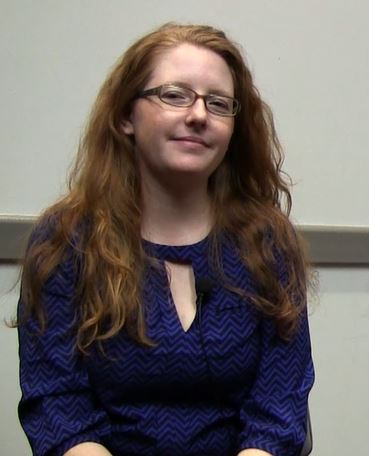
Today’s interview partner is Rhea Drysdale. Rhea is the CEO of Outspoken Media. She has been working in the field of search engine optimization and social media marketing for ten years with experience in-house, with agencies and now, as a small business owner.
This interview is also available on iTunes and on Youtube.
Follow OMReport on Facebook, Twitter or as to get the latest interviews fast.
Transcript
Rhea Drysdale is CEO of Outspoken Media, an internet marketing agency that is specialized in organic link building, online reputation management and SEO. Rhea has over 10 years of experience in on-page optimization, online reputation management and social media management. As speaker she hold seminars at Pubcon, Search Marketing Expo, MozCon, SearchLove and Search Engine Strategies.
Andre Alpar: Today’s OMReport is with Rhea. Rhea, can you please introduce yourself. Did I say the name right? Or Ray-a? Rhea?
Rhea Drysdale: Yeah. Exactly, it’s Rhea.
Andre Alpar: OK perfect.
Rhea Drysdale: My name’s Rhea Drysdale, I’m CEO at Outspoken Media and we do all organic-based search marketing, so linkbuilding, a little bit of social, reputation management. I think personally I’ve done a lot of reputation work so people in the industry know me for that, but as a business what we do more than anything is linkbuilding, SEO audits, that type of thing.
Andre Alpar: Right. So how big is Outspoken Media, if I may ask? Cos I don’t know you yet.
Rhea Drysdale: Yeah we’re small. So there’s eight of us…
Andre Alpar: It’s a boutique then.
Rhea Drysdale: Yeah definitely, we always say we’re boutique. We try to be small, we’re not looking to necessarily scale and have all these departments with silos. We’re really trying to be very comprehensive in what we do and make sure that each individual team member is trained on all areas and they can handle everything for the client internally and in-house.
Andre Alpar: OK so basically there’s like a, let’s say, a key contact person within Outspoken that takes care of all the necessities?
Rhea Drysdale: Everything for that client, yeah.
Andre Alpar: OK so they actually do the, let’s say, the very operative work as well as the strategic stuff?
Rhea Drysdale: Yup.
Andre Alpar: OK so how do you educate your eight employees? It’s the hardest thing to do, right? Especially when you want them to be that versatile, which is hard to get.
Rhea Drysdale: It is. So I’m really passionate about that topic right now, I actually just wrote about it and did a whole meet-up for iAcquire on training a new team. That’s the problem we’re struggling with right now: we’re small, we’ve been small, but this is the year where we’re staged to be able to grow quickly and the question that I had from a biz dev person that we’re looking to hire… he basically said, ‘how do you train? And if I were to bring you this amount of work, how do you train people to be that expert in everything?’ What I’ve found over the years is that you can hire people who have agency experience or the background in this, but there’s usually a little bit of deprogramming that’s required because they have a certain method or philosophy. That’s actually harder to train than if you just find someone that’s creative, a critical thinker, a strategic thinker and then train them yourself. So I’ve toyed a lot with different types of people. We’ve hired right out of college, we’ve hired seasoned professionals, and what I find works best is to just throw all these philosophies on hiring out the window and just trust your gut to find someone that again is strategic, they’re passionate about the industry itself, and they like to… agency is tough as well cos you have people that have to balance different types of projects and problems so it has to be someone that thrives on solving a problem.
Andre Alpar: Right.
Rhea Drysdale: Once we have them in place, we try to… and we’re overhauling our whole education process right now… but we try to set up a team-based training where into the first week we’ll send you some articles and things, and try to get you to read stuff, read things that we’ve written, but really it’s all very conversation-driven. We like to… because there’s only so much you can do to read or structure a programme.
Andre Alpar: So when you say conversation-driven, does it mean that basically you take them along when you’re on a job and they basically see you working and try to learn from that and then ask, you know, ‘Rhea, why did you say that?’ Or ‘Rhea, why did you do this?’ This kind of stuff?
Rhea Drysdale: Exactly. We say, ‘sit there when the client calls’, ‘sit in on a prospective call’. Because we get so many leads that if you even sit there, even if we’re not gonna sign with that client you’re gonna be exposed to a unique situation, and in our industry there’s so many exceptions, so many strange problems…
Andre Alpar: Exactly, everything is a little different.
Rhea Drysdale: Exactly. So I wanna have them have as much exposure as possible and then just come to me with questions.
Andre Alpar: How long do you think it would take when you hire somebody until they’re like on your, say, mind-set when they’ve reached the certain level where you think they can work on their own on a client?
Rhea Drysdale: We throw them on their own with a client pretty quickly. We do it with… There are always… So as a team we have budget meetings, we have strategy meetings… John Stallman is our director of client services, he’s there the whole time, I’m there on the calls, so they’re never left on their own.
Andre Alpar: OK, OK, so they manage it but there’s always you in the background being able to help, or even actually in the meetings as well.
Rhea Drysdale: Yeah it takes about, I would say, 6 months before they feel strong enough to really manage the account, but even then we’re still CC’d on everything. By about a year usually they start to feel really good and they can handle themselves, and at that point I’m going ‘take me off the emails, I don’t care, you’ve got this’.
Andre Alpar: No CC, please!
Rhea Drysdale: Yeah. And I mean, it takes about a year to really build a strong, trusting relationship with a client too.
Andre Alpar: That’s true, but that’s like a kind of different thing. Because you’re saying that your guys are so versatile, so that’s kind of hard because we… I tend to think that when you scale, which was kind of your question that you asked yourself, how to scale it, that you have to separate into more professionals and have departments…
Rhea Drysdale: Very specific skills, yeah.
Andre Alpar: I’m really curious, if we meet again in a year or two, if you may have changed your mind whether there have to be silos to be able to grow, but that’s an open question.
Rhea Drysdale: I don’t think I will. I mean, Outspoken’s about 5 years old at this point, and I’ve thought a lot about it and I’ve talked to a lot of people and I am curious, but I don’t think that we will because…
Andre Alpar: But if there’s 30 of you or 50…?
Rhea Drysdale: Yep…
Andre Alpar: Or you think the growth won’t be like in that dimension. Probably you would grow to 20…?
Rhea Drysdale: I mean 50’s a magical number. Especially in the States and I’m not sure abroad, but…
Andre Alpar: I’m not aware of it, please explain.
Rhea Drysdale: So, 50’s a magical number because at 50 employees you suddenly have…
Andre Alpar: 50: five-oh, right? Not 15.
Rhea Drysdale: Yeah, five-oh. At 50 you have so many regulations and compliance required by the government that… you know, 50 is aggressive. We’re 8 right now.
Andre Alpar: So you don’t wanna reach 50. Because it gets regulated and it loses some fun.
Rhea Drysdale: Well not that I wanna avoid that, because what we’re doing is we’ve actually built the company with those regulations in mind, knowing that we may get to that point. But right now I know that going from 8 to 20 is huge. That in and of itself presents a lot of problems and now you start to get a lot more non-billable people and all these other things that you need. So I am excited just to reach 20, hopefully in the next 1 to 2 years, and then at that point we’ll see if we can…
Andre Alpar: I think in those dimensions it’s still OK to head for worse-style people, that should work out, if I may say so.
Rhea Drysdale: I would say. That’s my goal, I’m gonna conquer it. My father said this… He’s at conferences, he’s a fireman and he’s actually the chief of training down in our area of Florida where I’m originally from, and my mum’s a teacher. I’m passionate about education and training.
Andre Alpar: Teacher and preacher!
Rhea Drysdale: Yeah, I’m gonna make this happen, we’re gonna keep training people.
Andre Alpar: OK so you… I heard one of your sessions, and you were talking about reputation management for a wealthy individual, I think it was. We actually also have sometimes enquiries from those kind of clients. Potential clients. And we actually turn down, I’d say, three quarters of them because our gut feeling says the stuff that they wanna get rid of that’s on the internet is there for a good reason and we just say we can’t help, or name a price that’s way too high and hope that they’re never gonna see this video, just so they say no.
Rhea Drysdale: We’ve done both. That’s, you know, a response. So what’s… tell me…?
Andre Alpar: How do you deal with that when you get an enquiry from somebody who you’re not sure that you should help them clean what can be found about them?
Rhea Drysdale: Well I tell them I’m like an attorney. I can’t help you until you’re honest with me. And so I’ve had folks outright lie. Just blatant lies. I’ve had folks where I just go ‘There’s no way that I would ever support this, I can’t work with you’. But it’s the folks that are a little bit in the grey area… the concern is, maybe the problem isn’t something that I completely disagree with, but I’m not sure how honest they’re being, or if they’ve fixed this thing within their organisation that caused the problem initially if it’s a company, or if it’s an individual are they truly sorry? I dunno. Some people are really good talkers. And why do they have to be truly sorry? I should just be a business owner that takes their money and does the work, but I care about being ethical, and so with my team especially, when talking about turnover and the company, I wanna make sure that my team is happy. That way we don’t lose them because I’m forcing them to work on an account that maybe they don’t believe in. So we always have a company conversation.
Andre Alpar: That’s the same thing that we take into account. For the same reasons. So are most of the enquiries when it comes to reputation management, is it rather wealthy individuals or is it more companies that have an image problem because of whatever incident that happened?
Rhea Drysdale: Yeah, I feel like the wealthy individual is rare. We have gotten that. We’ve gotten politicians, executives, and folks that come in and say ‘I need help’, or someone in their camp told them that they needed help… I’ve had VCs tell me ‘we need you to work with this individual executive before we go live with something… But what typically happens is it’s an 18 year old student that has a scholarship and they got arrested on some minor charge, or someone who was caught up in a small lawsuit from a business situation years ago. It’s those types of things where someone has one thing that’s been plaguing them and they don’t have a budget whatsoever, or it’s the other side…
 Andre Alpar: But if they don’t have a budget how can you help them?
Rhea Drysdale: That’s where… we created the ORM guide on our website and it’s a little outdated at this point, but the guide is a really good place for us to go ‘here is some information and I wanna help you, but I know you can’t afford this, I’m so sorry, but hopefully this will help’. What we end up having to take on really are the enterprise-level problems. Larger companies, or highly-regulated industries or things like that.
Andre Alpar: What is an example for highly-regulated industries? Like, farmer?
Rhea Drysdale: Healthcare.
Andre Alpar: Healthcare.
Rhea Drysdale: Yeah healthcare, banking.
Andre Alpar: OK so they have like a problem with a certain product that probably has a bad image?
Rhea Drysdale: Yeah it can be a certain product. One case: there was a situation with some Medicaid, Medicare fraud and it had been rampant within the organisation, resulted in big problems and things and we had to mitigate that against some news and stuff.
Andre Alpar: But they fixed that and then afterwards they wanted to kind of make their mistake less findable.
Rhea Drysdale: Yeah, which was nice because I liked that particular organisation, they were very proactive. I mean, they approached us years after the incident after they had already gotten rid of the executive team, brought in a compliance team to help everyone learn what not to do…
Andre Alpar: Yeah in such a case it’s great to be able to help.
Rhea Drysdale: Yeah. And in that case it’s like ‘yeah, you did exactly what they accused you of. You paid your dues. And now you’re making sure that it never happens again. ‘ And I wanna work with those companies.
Andre Alpar: So when it comes to linkbuilding, how does that work here in the States, because I assume it’s a lot different than over in Europe?
Rhea Drysdale: So, at Outspoken we’re all organic and everything we do is long-term. I just spoke on it here at PubCon. We’re looking at high quality/low risk. And I do like to think of linkbuilding in the sense of financial terms, that it’s not white hat or black hat, it’s high risk/low risk, conservative/aggressive. We’re very conservative, we’re very long-term. We work with a lot of clients where maybe they are engaged with other vendors on more aggressive sides, but they wanna bring us in as insurance for the more long-term.
Andre Alpar: How’s that work? I mean, you’re both working on the same website. If you have, I dunno, let’s say 3 different products and you guys are working on one, taking a conservative approach in one subdirectory, and the other guys who are like crazy-aggressive, but probably not saying it as much, they’re working on the other product and subdirectory, and then what?
Rhea Drysdale: Well that’s where we have to have a lot of open conversations and say ‘what are we working on…’
Andre Alpar: Does that happen often that people have 2 agencies here?
Rhea Drysdale: All the time. Not just 2.
Andre Alpar: Serious?
Rhea Drysdale: You’ll have 3 or 4 or more.
Andre Alpar: Working on the same domain, on the same website?
Rhea Drysdale: There are a lot of companies that like to say, ‘lemme go try all of these folks and see what works, and see what lasts’. So we pride ourselves on trying to stick around and last longer. But what is different about us from a lot of link vendors is typically they charge by the link or along those lines. We’re retainer-based, we see ourselves a little bit like a PR agency where we’re gonna work with X amount and each month within that amount we’re gonna subtract the cost of development of maybe a content piece or design. That comes out of the monthly budget and then everything else is put into a blended rate from their company on an hourly side, and we work hard to prioritise things that will have a high return, which could be social, but a lot of the time it might be content-based or products that we coordinate a giveaway with or something, always within FTC guidelines and according to Google guidelines. But we try to think strategically, it’s always a custom approach for every single client. It’s important that when we’re working with a lot of organisations that we pair up with their social team. We tend not to work with a smaller team where they’ll ask us to do all the social media. I don’t necessarily believe in that, I don’t think that you should ever outsource your social, I feel like that’s your brand, it needs to be internal and it shouldn’t go to an intern. But we’re happy to work with them and there needs to be a coordinated effort between what we’re doing and what social’s putting out.
Andre Alpar: Right, because if you create a great story or a great piece of content, the social media team should push it as well.
Rhea Drysdale: Yeah. And it’s amazing how many folks won’t do that. They’ll say, ‘Well we’re the SEO team, we’re this. And social media, they have their editorial calendar and it’s not gonna fit into it.’
Andre Alpar: Right. Why, it’s just a click more than usual, like.
Rhea Drysdale: Yeah, you have to be able to promote.
Andre Alpar: I wanna ask to do with this other thing that you mentioned, it’s very confusing to me, we see that very, very seldomly over in Europe… We just have one client that happened once, that they had wanted to try out several agencies… So how does that work? I mean you have to have a, let’s say, a technical onpage strategy? And then you take the content from there and try to acquire, you know, social signals, links, whatever. So how does it work? How do you coordinate that? I mean, you can’t be like 4 agencies pitching different things that have to be changed on the product on the website itself?
Rhea Drysdale: Yeah. Typically you don’t have ownership of onsite at that point. Onsite will usually be within an internal SEO team. And we’re talking really with larger enterprise-level clients, so there’s someone in-house that’s gonna manage all of the onsite.
Andre Alpar: So they don’t even ask you, you know, ‘could we do better stuff onsite so the stuff that you do is more effective? They don’t even ask you that? They just want you to do the…?
Rhea Drysdale: Sometimes, again…
Andre Alpar: But I’m asking about those cases that have this approach that it’s very, I would say…
Rhea Drysdale: Yeah, they say ‘we’re good, we know what our keywords are, we know what our content is, we can’t even do anything with the CMS because it’s so restrictive so we only want you to look at the blog. On that blog, here’s the editorial calendar. We’re working with this vendor, they’re going to post X number of times. You have X number of times to post and we’ll see which content does the best.
Andre Alpar: OK, OK, OK. On a blog I can imagine how that could work out without being disturbing.
Rhea Drysdale: Sometimes it goes into articles and then there is the linkbuilding aspect where you’re still getting to category pages…
Andre Alpar: But if there is an ecommerce website and they have the blog on the site then probably they’ll have you focussed with the linkbuilding or let’s say inbound marketing efforts on their regular shop, right? Not on the blog, that would be rather indirect. Or am I missing something?
Rhea Drysdale: That’s where it’s interesting. I think… So the people I’m thinking of are ecommerce. And so I think there’s a trend where a lot of folks are recognising that a lot of tactics that were used in the past to link to a category or product page are becoming very difficult and so they are really going ‘Well let’s just produce great content that drives the links in… Hopefully strategically we can get some links placed on the blog so it’ll have a one-off effect of that link coming in. It won’t lead directly to a product or category page but we can optimise the blog, which has gained all this power and it’s pushed to that, and so I think people are thinking a little more in, I dunno, in kind of roundabout ways about it.
Andre Alpar: Right. But if you look at how customers in ecommerce… When they interact with real customers, like end users that don’t have anything to do with any internet marketing topics, when you see how they act, they mostly link to products.
Rhea Drysdale: Yep, which… Product linking I have a problem with personally. I feel like yeah, you can link to a product but you have to assume that that product’s going to stick around for a while.
Andre Alpar: No, it definitely will expire, it always expires.
Rhea Drysdale: You have to go to a category page, or an article section or resources…
Andre Alpar: Yeah but if you look at real users, they always link to products, right? Because they say ‘I bought this polo at blablabla…’
Rhea Drysdale: So what we like to do in that case if we are able to achieve a backlink to a product through a relationship or something, is sometimes we’ll go back to them and say, you know, ‘thank you so much for linking to this, that product is actually no longer available, if it’s truly no longer, do you mind linking to the category over here instead where people are going to be able to get similar or really good products’. And a lot of bloggers are really comfortable with that and they’ll go ‘yeah sure I’m on it’. And they’re just happy that the brand found them and reached out to them.
Andre Alpar: Right, right, right. So when you reach out are you talking to the people you reach out to as a brand? Do you have your own email address within the brand?
Rhea Drysdale: Yes.
Andre Alpar: So you’re not getting in touch as Outspoken Media guys?
Rhea Drysdale: No. You know, when you reach out to someone and say ‘oh I’m in SEO’ they’re gonna tell you where to go, and it’s not somewhere nice.
Andre Alpar: So is the image of SEOs in the US really, really bad, as like these evil guys who manipulate all the search results for money and fun?
Rhea Drysdale: I think a lot of the population thinks that. I think that there is a small section that truly gets SEO and the value and sees where it fits within marketing, and I think that that percent of the population is growing but it’s taking a really long time. You know, we’re definitely up there with personal injury attorneys and used car salesmen.
Andre Alpar: Ewwwww.
Rhea Drysdale: Yeah. We’re seen as very spammy. It’s a hard reputation that we have to fix. But we always try to approach linkbuilding as the brand, we have more success. Sometimes it’s weird though, some clients will be of a certain level when it comes to recognition where, if we reach out as the brand, people go ‘yeah I’d love to work with you, but because you’re so and so, where’s the money?’ You know? ‘Yeah I’ll let you do this piece but you need to pay me for it.’ We’re not in the business of doing paid links, so at that point you have to really try to fix that.
Andre Alpar: Right. OK. That’s quite interesting. Thanks so much for the interview.
Rhea Drysdale: Thank you. I appreciate it.