
Episode 39: Interview with Mark Traphagen
This OMReport is with Mark Traphagen, Senior Director of Online Marketing for Stone Temple Consulting. Mark has spoken at major conferences and writes regularly for popular sites. He created and runs the largest online community about Google Authorship and Author Rank.
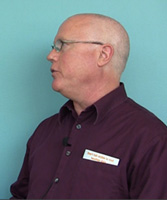
This interview is also available on iTunes and on Youtube as videocast.
Follow OMReport on Facebook, Twitter or as to get the latest interviews fast.
Transcript
In this OMReport we interviewed Mark Traphagen, Senior Director of Online Marketing for Stone Temple Consulting. He is a wellknown expert on Google+ and Google Authorship. Mark created the largest online community about Google Authorship and Author Rank and is a questioned speaker on major conferences like SMX, Pubcon, ConvergeSouth and SearchExchange.
Andre Alpar: So today’s OMReport is with Mark Traphagen. Can you please introduce yourself? And did I say your last name right or did I make a mistake?
Mark Traphagen: You got it right and since it is a German name you should be able to do it right better than anybody so you did a very good job. So I’m Mike Traphagen, I’m the Senior Director Online Marketing for Stone Temple Consulting, which has kind of a very made up job, I market a marketing agency.
Andre Alpar: But you’re not only marketing the agency online, you’re also marketing it offline, or are you just marketing the online agency online?
Mark Traphagen: Well there’s a little bit of both, I mean, right here we are at search… what conference is this?
Andre Alpar: SMX Seattle!
Mark Traphagen: It’s like I do all the SMX conferences…
Andre Alpar: Look out, it looks like Seattle.
Mark Traphagen: There we Go! Space Needle over there, ok. SMX Advance Seattle, so both Eric and I are in SEO and consulting. We do quite a bit of conference speaking, we do meet ups, we gather with people all kind of different ways so it’s offline too, but because primarily online and a good deal of that is content marketing, we do content for ourselves, for agencies that we build by authority the market place where people will understand who we are.
Andre Alpar: But then you’re really just pushing the company, you never willing to consult the customer if they’re interested in what you have to say, or?
Mark Traphagen: Actually I do have, well, my primary responsibility, and Eric guards this very carefully because he wants me to be doing it, is to market Stone Temple consulting, I am available a limited amount of my time to our clients. Primarily that happens through what we call our senior marketing consultants, our main marketing consultants at Stone Temple, they are free to call me in when they think that something is in my area of expertise and help them with their clients. And so I do do some of that but my primary responsibility is marketing.
Andre Alpar: How large is Stone Temple?
Mark Traphagen: Stone Temple is almost 50 employees now. We’re growing, we’re doing very well, and taking on new clients, so it’s a growing company.
Andre Alpar: Right. So kind of the area that everybody knows you work for is Google+.
Mark Traphagen: Yes.
Andre Alpar: So this network that everybody’s in but nobody actually uses, is that the one ?
Mark Traphagen: That’s the reputation it has…
Andre Alpar: I’m just joking, I’m a heavy user myself so I have… What I’m always confronted with is a prejudice.
Mark Traphagen: Yes, myself also. We all get that and we all laugh about that because, well, I just looked at mine before we started here I was looking at my Google+ feed and being at the conference there were…
Andre Alpar: You can’t see it!
Mark Traphagen: …hundreds and hundreds of notifications, responses from people, and… so it’s a pretty active ghost town. This is kind of where I made my reputation, made my mark. When it came along, I was fortunate enough to get a beta invite on the third day of the network. I think I kind of saw what it was, what it meant to be… I thought: this is different, this is not just Google trying to build another Facebook, but because they are very open, right from the beginning, this is going to be integrated into all things Google. And I said, well as a social media guy who comes out of an SEO background… this is something I need to be in and it’s worked for me.
Andre Alpar: I mean in essence is there a kind of social data, that’s what it is. And they don’t have it to have a social network, they have it to make search programme much better. I think, in essence.
Mark Traphagen: Yes, I totally agree. And I say that all the time, that’s the pitch we make to clients when we try to get them involved in Google+. We think of it this way, it’s like everybody works so hard to get influence with Google, right? We feel like we’re all children outside the mansion, knocking on the door and looking in the windows, trying to get some kind of leverage with Google. It’s so hard. And here Google has opened the door on the side of the house and said ‘Come on in! Play in our playground and be in our house.’ And so everything you do in Google+ is instantly and intimately available to Google. Some people are trying to – some people don’t get that, it’s scary and they don’t understand it – but if you’re someone or a business who is trying to build influence with Google, trying to do better in Google, doesn’t it make sense that you would want to be showing them how good you are right inside their own playground?
Andre Alpar: Right. So you did a presentation earlier today that I was lucky enough to listen to and you were talking about author authority which I kind of thought was a really funny term since you do online marketing for an online marketing agency and then talk about author authority so you seem to like these kinds of word things I guess.
Mark Traphagen: [laughs]
Andre Alpar: So maybe afterwards you do a video interview about this video interview with me or something.
Mark Traphagen: Yeah, that would fit my pattern.
Andre Alpar: We should be talking about the podcast that you and Eric do, then that would be like meta again, right?
Mark Traphagen: Yeah, that would take this to another level.
Andre Alpar: We’ll search for another meta. [laughs] Sorry, I got a bit distracted. What I actually wanted to talk about was if you actually want your picture up there in the search engine result pages then the author that you write the content with actually has to have authority and then you were talking about what this consists of. The one thing that I kind of missed or thought that I expected you to cover was more like a topical authority. Because in the end, Google makes up their own tags. So they know what you’re talking about, they know what you’re interested in, and even though you’re talking about, say, two different topics and one of them is +1’ed like crazy and the other people are just ignoring because you don’t seem to know much about it really or your followers are not too interested in it, they could push your author picture in the topic where the reactions you get are hot, a lot of them.
Mark Traphagen: Well the reason why I didn’t talk about that was because we don’t see them doing that yet really on that level. Which surprises a lot of people. People just expect that. We see that a lot, actually, in this kind of marketing. People think ‘well, this is something that Google could do so they must be doing it!’ but actually when you look at the data and you test it, sometimes you just kind of assume Google must be doing that. But they don’t seem to be doing it. And part of that is because these things are much more complex than we’d imagine, and they are things where Google takes its time, like they say: Google will serve no search result before its time. And that’s an allusion to an old wine ad here in the United States where it said ‘this company will serve no wine before it’s time’. Well, Google takes its time with search engine results.
Andre Alpar: So they’re maybe collecting data and will do that eventually at some point.
Mark Traphagen: I think they’re definitely collecting the data. So you know, if they have the data why wouldn’t they use it now? I think they’re still working on how they want that to work. In my presentation, I did talk about how Matt Cutts has said several times publicly at conferences and in videos the past year that subject areas of authority is something that they’re interested in, something that they’re working toward, but he’s always speaking in the future tense. ‘This is something that’s coming’ or ‘we’re gonna’… I mentioned that here was an example, a specific example that he uses again and again and again because he always does it the same way: ‘It’d be nice if I was looking for something 10 years from now and Danny Sullivan (who’s the head of the search engine marketing in search engine land marketing in chief) if he came up higher in my results because we know that he’s a trusted authority on that topic. And he speaks about it that way: that’s where we’re headed, that’s where we’re going, but we’re not quite there yet. This is something that we test extensively, so while we are seeing that they’re using authorship and author data on a very fundamental level, kind of qualifying you for certain features like getting your author photo shown in search or things like the in-depth articles feature in search. So they’re not using it as a ranking factor, they’re not using it as a topic yet.
Andre Alpar: If I interpreted it right, what you said during the presentation, is basically you suggest that it’s a really, really good quality signal if the Google+ author is writing in-depth articles that are marked as such. Did I summarize that right?
Mark Traphagen: Yeah, be careful because in-depth articles are a specific feature.
Andre Alpar: That’s what I wasn’t sure of.
Mark Traphagen: No, I was talking more about in general, like if you’re writing in-depth (small ‘i’, small ‘d’, small ‘e’) that you’re generally writing better quality articles that go deeper. You wanna be careful about this because sometimes people think that just means longer.
Andre Alpar: Okay, because I was confused about the in-depth article, but what you’re referring to is a specific feature.
Mark Traphagen: Yeah, it’s more of a generic term.
Andre Alpar: Okay.
Mark Traphagen: So what we saw was – and just to give your audience a little background – in December of 2013 Google began to reduce the amount of authorship snippets, the snippets of authorship with the authorship photo that you see in some of your search results. And Matt Cutts had said at PubCon in Las Vegas that they were going to do that because they found in their tests that when they cut down the amount of snippets they showed, the quality went up. Now I don’t know exactly what they meant when they say that the quality went up other than it might just be as simple as, you know, fewer means better.
Andre Alpar: I think in general that would mean that people are directed toward the good results.
Mark Traphagen: Yeah. Some SERPs, not all…
Andre Alpar: Well, maybe some of the pictures that they have eliminated, they have pulled people toward results that weren’t as premium as they should have been.
Mark Traphagen: Well, and we were finding queries where there were sometimes 7,8, 9 or 10 – the top ten results! – all had pictures; that means nothing then. If everyone’s getting an award then the award doesn’t mean anything, right? So they wanted to give that…
Andre Alpar: But they had to do that for awhile, so everyone would jump in the game. That would make the ghost town suddenly seem alive, right?
Mark Traphagen: Yep, I think authorship certainly was a play to get people not just involved in Google+ but again, going back to what you said in the beginning, that Google+ is really the identity engine of Google. So they want to get as many people and brands and everything on there as possible because it gives them better tracking data. So yes, I think it was partly that. But going back to what I was saying, was what we found was I did a study of hundreds of author profiles that I had been keeping track of. So I was able to see the ones that before December 2013 were consistently getting their authorship photo for most search results and then after December we found that there were some that continued to get it mostly all the time, there were some that kind of dropped to a medium stance where sometimes they get it sometimes they don’t and they dropped to what I was for a while calling second-class authorship where they would get just a byline, but no photo. Just a few weeks ago they stopped doing that. They appeared to have dropped that. So now it’s the photo and byline or nothing. So anyway, some people lost it all together and so there’s different tiers now. And so what I looked at was – it took me over a month because not only was it profiles, but it was hundreds of pieces of content associated with each of those authors – and I started looking for commonalities. And what I reported really quickly in my presentation was that we found the number one common factor of them all was high publishing on high authority sites. So, sites were more like authors as far as the factor in this. And that didn’t surprise me because that’s a low-hanging fruit for Google. They already know how to do that. They know how to you know, rank sites. So, it might be surprising for people who might expect that there be more author authority in the mix or more author rank by now, but again as I said earlier, just be cautious about turning up the crank on that. So that was, you know, the content quality of the site was #1 factor, second to that seemed to be the quality of the content overall. And again, these are somewhat subjective values. So we don’t know exactly what Google looks for when they say quality content but they say if you look at it enough, you get some ideas of that. So, um, in any case then, there was a third factor that I said in my presentation that I wouldn’t even include this because I couldn’t see it in my data any evidence for it except for the fact that two different Googlers mentioned it. One anonymously in a search engine journal article, quoted anonymously, but another publicly: John Müller, who is very prominent in the web master team and does weekly hangouts and that. In a webmaster hangout he confirmed to us that there is some kind of author trust factor that enters in. And that’s all he said about that, he called it that, he didn’t define it very carefully.
Andre Alpar: So what would your guess be, what it is. Having a certified Google account, would that help author trust, would you think? That’s something very basic, that I could have even.
Mark Traphagen: No. No, I looked at that and saw no correlation between a verified account, with the check mark next to the name. No.
Andre Alpar: So what is your guesstimate? I mean, I know that you don’t know and I don’t know, but what’s your guess?
Mark Traphagen: My guess is that it could be a couple of things. It could be partly – and could be a variety of many things – partly it’s the overall quality of content because the one anonymous guy said ‘we look at the content that the author does’. And that’s across many sites if he or she publishes on different sites. And whatever Google looks at when they evaluate something according to something like the “quality of the content” that there’s some kind of score or factor for an author that comes in on that. You know, like if you’re not consistently publishing content with quality, you’re going to have less authorship.
Andre Alpar: So I should have all my blog articles reworked that have typos in them?
Mark Traphagen: [laughs] Who knows? That would be a start maybe.
Andre Alpar: I was just joking.
Mark Traphagen: Well, I was talking more about Google is getting better at Panda and things like that. At least they’re trying to evaluate content that’s not just saying the same thing that everyone else has said or it’s not really giving anything new, not giving anything in-depth on the query it’s not gonna really you know if somebody …
Andre Alpar: Well, the reaction could be a ranking sign. Do people like it? They seem to know it’s your content when it’s ranked and really liked that the traffic delivers long clicks, whatever.
Mark Traphagen: That could be. So it could be long clicks, I had mentioned those as well. Those could be factors. Again, this is all guesswork, because you know Google won’t tell us. But it’s just interesting to know. So right now the way I talk about authorship in terms of search is it’s not a ranking factor unless you wanna say they’re lying, several people from Google again, including Matt Cutts, have said that, have said directly in recent times that it is not a ranking factor at this time. But, it is used in some ways. And it’s used I think, I call it a qualifying factor. So it gets you at a certain level it gets you in the door of certain features, like having your search photo shown or …
Andre Alpar: Yeah, that’s a huge thing once you get on the first page, you know, getting more of the equity of the search. That’s well worth it.
Mark Traphagen: So someone asked me in the Q&A session ‘How do I get there? What do I do to become that trusted author?’ and I said —
Andre Alpar: Call Mark!
Mark Traphagen: [laughs] Yeah, just imitate me! Right.
Andre Alpar: Like everything that I do; share it!
Mark Traphagen: But it’s… um, well that certainly helps me, but it’s the things that we’ve been saying all along. Sometimes people just take it and think ‘yeah, yeah sure’ but they’re more and more the things that really work because the thing is, when you’re producing content really think hard about adding value. You know, if I’m going to write this blog post or do this video or make this podcast or whatever it is… for somebody who is looking to answer that question they have to come to that content – does it really give them something that, when they finish, they go ‘Oh! That’s just what I was looking for! That’s what I need. That answered my question.’ If not, then you’re just, you know, it’s just run-of-the-mill regular stuff. Seek to be in that cut above, to be saying things in a way that nobody else is saying them. If you’re doing that consistently, you’re building audience around your content and people are sharing it and it’s …
Andre Alpar: …it’s a little bit like building a brand, but on a personal level.
Mark Traphagen: It very much is!
Andre Alpar: I really like the idea that you brought up in there.
Mark Traphagen: Yeah, that’s exactly what you’re doing. The things that you would think about in marketing, if you’re doing good marketing as a brand, you’re doing that for yourself as a person and that builds a trust with Google the whole time.
Andre Alpar: Right. Great stuff Mark. Thanks for sharing!
Mark Traphagen: Thank you very much, I enjoyed it!