
Episode 21: Interview with Ade Oshineye
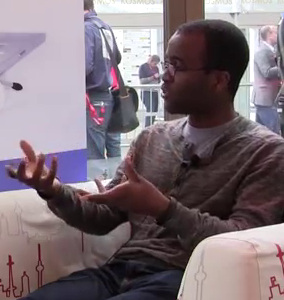
Today’s interview partner is Ade Oshineye. Adewale is a Developer Advocate at Google+ working in their London team. He was interviewed at the OMCap Internet Marketing Conference.
This interview is also available on iTunes and on Youtube.
Follow OMReport on Facebook, Twitter or as to get the latest interviews fast.
Transcript
For this time Andre interviewed Ade Oshineye from Google. Ade is Developer Advocate at the Google+ Developer Relations Team in London. Normally he is working on many different protocols, standards and programmatic interfaces helping to keep the Social Web running. As co-author he was involved in the publishing of the book „Apprenticeship Patterns: Guidance for the aspiring software craftsman”. Futhermore Ade is part of the team behind developerexperience.org, where he tries to find out, how to successfully transfer the technics of the professional User Experience to the products and tools of the developers.
Andre Alpar: Hi Ade, its great to have you here.
Ade Oshineye: Nice to be here!
Andre Alpar: I can’t pronounce your last name, so I like to ask you please pronounce your last name.
Ade Oshineye: Its O-shi-neye.
Andre Alpar: Sounds amazing! I wont try to say it. You are from Google: So what is your role within Google? How can you explain, what you are doing – besides taking pictures all the time in the conference.
Ade Oshineye: I work on GooglePlus. I’m a Developer Advocate. That means I explain how people, specifically developers, can use GooglePlus to make their products better. How can they use our platform to make their products better for their users.
Andre Alpar: When you say developers, you don’t mean your developers in Google, but outside developers?
Ade Oshineye: Exactly.
Andre Alpar: For example, there is a functionality within GooglePlus and then you teach them about it and they can figure out whether it does make sense for their product to integrate or not.
You just showed me these great functionalities with auto backup, where you guys try to figure out where you can make animated GIFs out of several pictures somebody took or try to pick out the highlights of a large collection of photos – how does that fit with your job? Is that some of the stuff you teach people what GooglePlus can do? Is that part of it? How does it work together.
Ade Oshineye: Part of it is understanding the vision behind GooglePlus – there is the consumer product and making the experience really great for users, which is what makes the platform so valuable to developers. The platform is so valuable because of the functionality they can have and for the users for the usage they have. So, part of my job is understanding what is great about our products, so that, when people use the platform, they use it in ways it will makes sense for users of the products.
For example, GooglePlus is really heavily focused on photography. And photographers have been one of the first groups to really adopt it. But the funny thing is, once the photographers adopt the products and they start sharing photos, they start wanting the apps, the tools they use, to use the platform. Because if I’m going to share something from a photo app, I will share it to GooglePlus. If I’m really into music – and again, music is another group of people that really adopted GooglePlus – if I’m on SoundCloud and I’m doing mixes, I’m doing a podcast on SoundCloud, I want to share that to the stream. I want to share it to the GooglePlus Stream in the iOS-App, the Android-App – which you can do with SoundCloud. And I work with them on that.
So it becomes… you are doing something with the platform, because the users of the product demand the integration, or they feel the integration would have value.
Andre Alpar: So its like the activities I’m doing anywhere, you want to bring them to the platform. Or anything that fascinates me should have a second life on the platform?
Ade Oshineye: Exactly
Andre Alpar: How does this fit with everything Google does for me? For me, GooglePlus – I mean, I’m coming from a Search Marketer perspective – so for me GooglePlus is where Google aggregates data about people so you can do best what you earn the money with, which is serving ads. Because if you learn more about me, because I use GooglePlus, then you learn about what fascinates me, you can see the automated tags that already figured out these are the topics he cares about, he talks about, he comments on. Then you know what adds might be the right ones to serve to me that will be less disturbing, because they are already customed to my needs. So, that is what, from a Search Marketer perspective, is interesting about GooglePlus. But then again, what you are talking about is… totally different. How does that fit together?
Ade Oshineye: I know what you mean. I think, you have to start at the beginning: Googles mission is organizing the worlds information. That’s not just web pages. That includes the photos you take. The fact that I take about a thousand photos every few month or so – its great. But then, when I want to find the one photo of those trees in Berlin and I cant find it – That’s the kind of problem Google should solve. And with GooglePlus and the semantic search technology we have, I can actually take a photo and then six month later say: „Show me photos of sunrises in Berlin” or “Autumn in Berlin” and it will show me the photo I had in mind. That’s really powerful and valuable.
Where GooglePlus comes in, is more a way of taking all the things Google already does and making them better by bringing in things like your Social Graph by letting you share a place with people or share a review with the right people or, when you take a photo and you found that photo of the trees in Berlin, sharing that with people. Or things like being able to, let’s say, when I’m creating this review and it’s great, and let’s say, I’m famous and I write a review about this restaurant, about how great it is. As the restaurant, as the publisher of the restaurant’s website, what I would like to go to do is to take that endorsement by somebody famous and embed it in my website – what you can do with GooglePlus. Or being able to take the conversation that happened around some piece of content, maybe a video, and use GooglePlus to give you better quality comments on YouTube. And then maybe embed that on your website. So there are all these places where you use Google and we think GooglePlus can make them better. And that includes the experiences for users, for publishers, for developers, for advertisers.
Andre Alpar: So, how do you think is the progression of GooglePlus? How does it differ, when you talk to developers and when you talk to marketers? Because here it is obviously only marketing guys. So, they are like… are these like two groups of interest. Whats the common ground and how do they differ?
Ade Oshineye: So, I think, again, we go back to history. One of the reasons Google was distinct from all the other search engines that existed, was that Google was the first one that did a good job in balancing the interests of the people searching, the person buying the adverts and the search engine. Because if the top result was just available to purchase and wasn’t relevant, then you as searcher won’t search there again, you as the advertiser won’t advertize there again, because the users that clicked through didn’t get a good experience. And what we did with the way we did auctions around advertizing was to actually find the best advert for the person that is searching. So, if I’m looking to do “iPod repairs in East London” and the first advert is from someone that does iPod repairs in East London and I click through, I’m very happy. And I would come back.
So, that is what we have always done. And so, when it comes to the GooglePlus platform, Marketers want campaigns that have measurable Return on Investment. So, one of the things we’re trying to do with GooglePlus is to give you metrics, give you the analytics, give you tools that achieve this.
Andre Alpar: But this is, I mean, you can see some stuff in Google Analytics, but it feels like just a start.
Ade Oshineye: We’ve just really begun. There is a lot of data being exposed now in Analytics. There are tools being exposed in the GooglePlus Insights for local pages. So, when I did my talk, I focused a lot on what happens, if you are a local restaurant.
Andre Alpar: Do you actually need a website, still? Or could you just have a GooglePlus page and direct your URL straight to the GooglePlus page?
Ade Oshineye: Well, I am a big believer in owning your own website. But using social to enrich and enhance it. So if you’re an restaurant and this is your website and your website is maybe very fancy, but users, who just want your phone number – they are searching Google and they want your phone number. The GooglePlus place page for your site or the knowledge panel on the right site that has your phone number is a great result. The user may never go to your website, because the phone number is there, but they can call you and book a reservation. That’s great. If they then walk into your shop or restaurant, they pull out their phone and Google now shows them a card with your restaurant then and they click on it and go to Maps…
Andre Alpar: I can put a card in? At the restaurant? Not yet.
Ade Oshineye: So, what they can do, when they search for you, is they find your GooglePlus local page, that’s more like the service of Google now. And then: “Oh, yes. That’s the one I was trying to go to.” It’s that kind of interaction, where the website links to your GooglePlus local page, which connects to your YouTube Channel, which then shows what your restaurant is like and gives them a much more full experience than your website.
Andre Alpar: I wonder, if I should… I mean, if I’m a restaurant owner and I know people are interested in my Indian restaurant straight in the middle of Berlin and when they visit my website I can put a remarketing pixel and then try to remind them every second day: “You can have lunch with us again.” But if they visit my GooglePlus page I can’t do any re-marketing campaigns. Were you thinking about that or were you more…
Ade Oshineye: Well, did you think about, why are you are re-marketing and how to make your re-marketing useful to users? You are re-marketing, because you want to keep them engaged with you. You want them to be aware of what you do.
Andre Alpar: Or just remind them: “You remember, you where at my place. You really liked it. Come again.“
Ade Oshineye: But if you do that every two days it then becomes annoying. And then you just have changed the sentiment about your brand. However, if you have a GooglePlus local page and you claim it, you can post interesting content. So, maybe they are passionately interested in India, in the history of India, but are not going to want to be reminded by your restaurant every two days. But maybe you post recipes every couple of days or you post a photo of your kind of food or you post videos…
Andre Alpar: I could push that via re-marketing, too.
Ade Oshineye: You push that, but it’s annoying and they won’t opt-in. But if they follow your page, because they care about your brand, and you post every couple of days something interesting and relevant and shareable – Great! It’s claimed, they got permission for it. So, the cool kids call this “Permission Marketing”. It is the idea that you are pushing content to the user the user wants. You’re reminding them you exist and you are valuable and you are respectful of their attention.
Andre Alpar: But you wouldn’t post a recipe on your website and then say at GooglePlus “Hey, we have a new recipe online! Visit us over, if you want to see the rest.”
Ade Oshineye: Or you post a photo of the recipe. That will link to your website. And they see it.
Andre Alpar: And then hope that people will opt-in.
Ade Oshineye: You want people to opt-in. Because if they opt-in, its a stronger bond. The person, who opts-in sees your messages not as spam or as marketing, but as valuable information from a valuable brand.
Andre Alpar: Do you see that happening, really, on the typical Google local entry? Because the average restaurants, they are not super internet agile. It’s not like they feel as digital natives.
Ade Oshineye: That’s exactly, why its going more useful for them. Because for them, editing their website is a big burden. The challenge involved in actually writing HTML or paying someone to write HTML means it’s something that they do rarely. Whereas typing: “Hey, we just came back from our holidays to this place and we have this new recipe we learned on our holiday.” That’s five minutes work. Taking your phone out, taking a photo of the recipe you just made… five minutes work. 15 minutes – you just posted some content. If you have a local restaurant, you have 200 followers, who all live locally, and you have just – your shop’s being closed during the holidays, you came back, you got a new recipe. If my local restaurant is saying: “We got a new recipe for Tiramisu, because we just came back from Italy”, I’m gonna visit.
Andre Alpar: Sounds true. Sounds appealing.
What would you suggest, or – i’m not sure, if this is a proper question to ask, but if people have a claimed Facebook page and a claimed GooglePlus page, should they push the same content. I mean, some people might use Facebook rather than GooglePlus. So, should I try push the same content or try different pieces of content. What are your points on that? Are the users of the two platforms totally different?
Ade Oshineye: The experiences is that it’s different. Most people start with posting the same things to both places, because it’s easy. Over time the kinds of engagement they get differ. The kinds of posts they get engagement on GooglePlus are very different to the kinds of things they get engagement on Facebook. So, on Plus, for example, if it’s visual it does really well. We have a first class visual experience. We have a lot of great photographers using the product. On your GooglePlus page you will see people, who have visited your restaurant or your shop, uploading photos they took. They will be showing up in Maps, you’ll be discovering them through Search. So, that content, if you get the Knowledge Panel triggering, it will show your recent posts. So, if the kinds of things you are posting are relevant and engaging and say: “Hey, we have a discount on this thing this week!” or “Hey, our chef just got married!”, it means that when people come to your shop, because they found you from search, clicked on the recent posts by your chef getting married and said “Hey, congratulations on your wedding”.
Andre Alpar: How will all play out with the Google Knowledge Graph inserts, when GooglePlus pages are available that could meet the Search? Because especially with restaurants, which you like to take as an example, there are so many, like for example, I know several restaurants in Berlin that are Italian and their names sound confusingly similar. How would you try to figure out that. Or would you rather not show the Google Knowledge Graph insert or show several of them and then the people should pick, just like with search results?
Ade Oshineye: If there are five restaurants called…
Andre Alpar: Milano
Ade Oshineye: …Milano, for instances, but I’ve been to two and you’ve been to one. The ones I’ve been to are probably more important to me. The ones you’ve been to, if we are connected in GooglePlus, are probably also more important to me. If I’ve been to a restaurant, I’ve checked into that restaurant, I uploaded photos of that restaurant and I’m following that restaurant.
Andre Alpar: That’s very, very obvious.
Ade Oshineye: You know, that may be not the most famous one, it may not be most popular one, it may not even be the one that is the nearest to me right now, but that’s the one I want. So, every time I come to Berlin, and I search for restaurants, “La Parrilla” comes up. It’s a very nice Argentinian steak restaurant. I’ve been there several times, I uploads lots of Photos there…
Andre Alpar: Can I suggest a different steak restaurant to you for your next visit?
Ade Oshineye: I should point out “La Parrilla” is also important to me, because first time we went there, there was a friend, who died shortly afterwards, so it has sentimental value, too. And that attachment means I want to come back. It’s the one I…
Andre Alpar: It’s a place to remember.
Ade Oshineye: Exactly. So, there may be others, they may be better, but I dont have the affinity with them, I’m not following them in GooglePlus.
Andre Alpar: So, it will be rather a tool to remember than a tool to discover, if you say it that way. Because you can not do both at once.
Ade Oshineye: We can actually do this. At Google Search one of the things we are really good at is diversity. Showing different kinds of search results in the same thing and not just a pool of links, but segmenting them properly. So, that you can say, there is a restaurant we show you, because you have gone there before. Here is a restaurant we are showing you, because it is similar to ones you have been to before. Here is a restaurant we are showing you, because people, who have similar tastes than you like this restaurant. And here is a restaurant we are showing you, because it is new.
So we can do all of that in the search results.
Andre Alpar: And then just mix and try what happens and what works best for the group.
Ade Oshineye: And then of course, if you are searching, and we show you a restaurant that’s been reviewed by a fan of yours or by somebody famous, who…
Andre Alpar: Who I follow?
Ade Oshineye: Exactly. Suddenly, it is making search results better. And if you don’t like any of that, that’s okay, because these are suggestions. The idea is, like, Google is an assistant. It’s differential. Let’s say: “Here are some things that might be helpful”.
Andre Alpar: And then you pick.
Ade Oshineye: Exactly.
Andre Alpar: Thanks so much for your time and for the visit here in Berlin.
Ade Oshineye: And I hopefully will have an animated GIF of you that I will show you later.
Andre Alpar: And I’m really curious to see, if it works!