
Episode 11: Interview with Chris Boggs
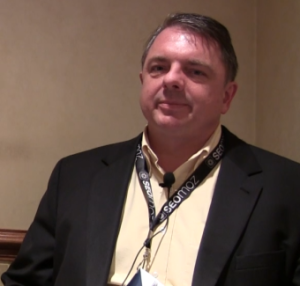
Today’s interview partner is Chris Boggs, chairman of SEMPO, the worlds largest trade organization for search and digital marketing companies. Furthermore, Chris is CMO of Internet Marketing Ninjas and member of the advisory board of SES New York.
This interview is also available on iTunes and on Youtube.
 Follow OMReport on Facebook, Twitter or as to get the newest interviews fast.
Transcript
In our second edition of our we spoke with Chris Boggs in the course of the SES in New York. Chris Boggs is the chairman of SEMPO, the worlds largest trade organization for search and digital marketing companies that also includes AKM3. Furthermore, Chris is CMO of Internet Marketing Ninjas since February 2013 who count as one of the leading institutions within the SEO scene, not only as an agency but with their forums and tools:
Andre Alpar: We are here with Chris Boggs. Chris can you introduce yourself?
Chris Boggs: Yes I’m Chris Boggs, the Chief Marketing Officer with the Internet Marketing Ninjas. and I’m also the Chairman of Sempo Global and I sit on the advisory board of SES as well.
Andre Alpar: Ok. So can you tell as a bit about Sempo, how many people are there at Sempo and what does Sempo do for it’s members or for the industry?
Chris Boggs: Sure, Sempo is a global non-profit organization. Dedicated to promoting awareness, and education, and networking and research within the Search Marketing field, historically.
We struggled over the years with potentially rebranding because we realized the importance of Social Media as well within our industry and we talked about maybe 2 S’s and PO, and so forth.
But we really – we’re the search social marketing professional’s organization. We’re made up of approximately 1000 member units, some of those member units can have more than one individual.
We have individual level memberships, as well as two levels of corporate memberships. The corporate memberships are either 5 seats or unlimited seats, so I think that of actual users of Sempo are floating somewhere around the 2000 number. And I first gained insight into Sempo way back in 2004 at SES San Jose and the organization has grown tremendously over the years.
Andre Alpar: So are you guys asked when there is like an anti-trust?
Chris Boggs: Yes, yes -
Andre Alpar: And then they approach you and ask, “Can we talk about it?”. That would be the typical thing an industry association would do, right?
Chris Boggs: Yes, more and more so. It’s taking a while for us to establish the credibility and the credence within both the actual news organizations but also even for the search engines.
For example, we work closely with Google’s marketing team. In situations like that to be able to provide a Sempo sort of perspective on things. So Google looks to us as being a non-biased group and so I would say over the last year we’ve really grown into that area though. When they was SOPA and PIPA, which was the legislation here in the United States, that was a little bit frankly stupid because the law makers didn’t understand exactly what where they doing.
Andre Alpar: It happens in the same way in Germany too. We have something called, “Leistungsschutzrecht” which it’s crazy. It’s again from the publishing houses, from one or two, that are close to politics. And again it’s a crazy thing they are trying -
Chris Boggs: Yeah, sometimes the politicians they get explained something by one person that has one particular point of view on it and that point of view may not be educated either, right? So… It’s a difficult thing. But it’s definitively a role for Sempo in the future, to be more vocal in issues that are government related or legally related and certainly industry related.
Andre Alpar: From the members, how many of them are more in-house SEO’s, how many of them are from agencies, how many of them are rather smaller agencies – as in one or two persons, how many of them are like really big agencies? Do you have an idea of the split of how it was?
Chris Boggs: That’s a great question and I don’t know what the percentage is.
Andre Alpar: Okay. I was just curious.
Chris Boggs: But I do know that there is a good mixture from all those segments that you just described.
We have from the very biggest search agencies all the way down to the single search consultant
and we also have a number people that are members from within a larger organization or a smaller midsized organization. We’ve found that sort of promoting a multilevel -and you have to be careful when you say the word multilevel – multi-segment group we can thereby have more of a non-biased or broader opinion on the particular discussions.
Andre Alpar: And your opinion will has more weight because you represent more people, right?
Chris Boggs: Yes, and if you are exclusive then there’s automatically an asterisk by what you say, right?
Andre Alpar: So let’s switch now to your other thing, you are with Internet Marketing Ninjas but just for a short time, you have not been there long right ?
Chris Boggs: Yes I just started February 2nd, officially.
Andre Alpar: Would you rebrand because Ninjas sounds too “childish”?
Chris Boggs: You know it’s a good question and in fact it’s something that I struggled with briefly. We’re marketers. And I think that sometimes marketers are a little bit too afraid to sound childish or to try to go out and do some of the many things that they are advocating that their clients do right. So if we can’t, as marketers be comfortable with what we are doing, then I think there is an issue. Personally the name “ninjas” to me doesn’t really suggest that it’s childish as “per se”. I think that – unfortunately there is probably some people that think: “Oh, Ninjas? Who do these guys think they are?”, right ?
But the bottom line is that we’re very talented search marketers.
Andre Alpar: No that I don’t doubt, I see the individuals behind it. So I don’t doubt that there is competence and knowledge.
Chris Boggs: It’s a great question. And I can tell you that the answer is, no not now. If it proves to be a problem down the road then we’ll consider it. But frankly it’s a good theme and to me it gives us a lot of opportunities to market.
Andre Alpar: I think that in Internet Marketing Ninjas, I’m not sure if any of this decisions that I refer to have to be with you but I know that they have bought some forums, that have relevant reach
and also publish free tools.
Chris Boggs: Yes, and I’m actually involved in the whole side of it. So there is the ‘Internet Marketing Ninjas’ side as it were, which is the consulting full service agency and there is what we call,
the ‘Devshed’ side, because the ‘Dev Shed’, Developer Shed is the biggest community that we ‘ve acquired.
[Andre shows Chris the www.developershed.com in the his SES Badge]
Exactly. And so underneath that DevShed side -and yes you can see that we’re on the actual conference thing- you have “WebmasterWorld” which is a very established community,
Andre Alpar: Everyone should know it!
Chris Boggs: Yeah, thank-you. SEO chat, Cre8asite, thread watch – these are also frequent communities. And obviously I wasn’t involved in the acquisition and everything but I know that Jim felt that bringing these communities together would provide both us as well as our industry with a broader set of perspectives. Much as we just talked about with Sempo, the more different communities that you can get involved then, potentially either at least talking every once in a while or… The first step is just acknowledging the existence of the other one, right? I think that there is a lot of great planning. In terms of the tools that’s certainly part of this whole DevShed option. We do have plans to release some of our previously ‘internal only’ tools to the public
Andre Alpar: They will be paid, not free ?
Chris Boggs: There is gonna be paid and free tools.
Andre Alpar: Because I was wondering, you know – I would understand, I mean for me, for now you where mostly an agency and not a tool provider so I thought why get the reach, and the reach for me would only make sense if I’m a tool provider, where I have some subscription based bussiness
where it does make sense to have the reach because an agency can’t scale, not as fast as you can buy reach. So I figure okay something has to happen…
Chris Boggs: I think you figured us out, Andre.
[Laughs]
Andre Alpar: Everybody did. So we expect some tools to come out of your house and that will be kind of
the missing part of the puzzle.
Chris Boggs: Yes I believe so.
Andre Alpar: Ok, so I’m really curious about what kind of tools. When I can get beta access?
Chris Boggs: We should probably be releasing some access to some industry insighters by next month, maybe May
Andre Alpar: Ok, I will write you daily e-mails
Chris Boggs: The plan is to look something around June, you know we never want to set a hard date on this -
Andre Alpar: It always takes longer and costs more…
Chris Boggs: As you know, yeah.
Andre Alpar: Every tool is the same. So what do you think – you and me, us, as an agency perspective -
Do you think we are kind of spoiled, because we can always say, “this should be done that way”, “that should be done this way” and then there is this poor in-house SEO guy who hires you,
which I’m sure he pays for well and then you say, “this should be done and that should be done”
and he comes back home and has to talk to his product guys, to his marketing manager guys, to probably his C-level guys and can’t push through with the things that he and you know are right
and you figured it out for him and he loves them but he cannot push them through.
So do you think that it gives you as an agency like a spoiled and unrealistic perspective sometimes, that you are not in the companies?
Chris Boggs: Is a very – and I love the way that you’ve worded that question because – having implementations and reccommendations is the constant thorn in the foot of an SEO, right?
It’s how much that you had recommended – can you actually get implemented? and typically, it is funny because there’s different things between large and small organizations right?
The large organizations have all this authority, and if they would only just make a couple of little changes they can go so well. But what’s stopping them is all their own internal processes
from making these changes and they’re not getting as much value and often they’re engaging in very expensive agencies that are then put on the line to show value and they are not able to, you know?
And I think that’s a very key thing – and it’s on to how you start the relationship, right? And you have to establish at the onset, certain rules of engagement.
And certain rules – for example in my previous role, we worked in some verbiage in to contracts, that there was a requirement of turnaround of either approvals of content for example
or maybe we’re going after certain links or whatever and they have to approve them.
But we set a 48 hour turnaround time right on that. And if you put that omen on them and then the account manager starts to call them and say: “Look, we’re supposed to have this 48 hours ago”,
then the account manager tells me or the other exec. and then I happen to have a conversation with the exec. that’s managing the team over there, and I can be like,
“Hey what’s going on, your team is supposed to be implement this and nothing’s happening”,
“Oh, but they didn’t told me and bla blah” and then suddenly it goes. And now, that’s not scalable, right? So, I think at the onset is the most important part: Is to really establish that.
And in fact I’ve also seen contracts that have been verbed or worded in a way, that there is a pre-requisite before you move in to the ongoing SEO, right? We often look at SEO as technical and content -
Andre Alpar: Like the initial stuff…

Chris Boggs
Chris Boggs: Right, so you have to implement X percent of the recommendations for Phase 1, before we even start on Phase 2. I mean it makes sense if you think about link acquisition right? If you can’t implement the content, what are going to build the links to? You know, so some of it like that make sense but to consider that within the contract and the negotiation time – it’s one of the easiest things to forget, right? But if people take the extra time to establish expectations for turnaround – a reasonable turnaround time, you know – maybe it’s 2 weeks if it’s a huge healthcare or financial services that and you know that is going to be legal and compliance issues that they have to do but as long as it’s written in the contract, that has to be implemented for us to perform, then it puts it much easier if after the end of quarter there’s zero performance, you know, the executives come together with the account teams
and say, “what’s going on here?” Well? It’s pretty simple. We delivered this, this and this recommendation and you implemented…Nothing.
So you know, it becomes probably an awkward moment for the internal team when in a meeting like that but I’d be much rather from an agency perspective in that position than to say, “Well you know you really needed to implement your stuff…” than have them say, “Well why didn’t you tell us that was more important”
and bla blah and bla blah
Andre Alpar: Do you think that the agency should go a step further and have their own tech guys being able to implement this stuff that they suggest that should be done?
Chris Boggs: That’s a good question too. It depends really on the level of business there, right? There’s –
and obviously there are some small/medium sized businesses that are hyper protective of their code and their data and that depends also in the personalities involved too, right?
If there is a very strong IT lead and you are working on the marketing side and the IT lead says, “No! Go away. Don’t touch my baby!”
That can happen sometimes and then you have to work through negotiating, diplomacy…
Andre Alpar: Does Internet Marketing Ninjas do something like that? Like sending tech guys over to do programming?
Chris Boggs: We have the capability of doing that. There’s no current engagements that we have right now where we are doing that.
We’ve done that in my past roles, where we have, sort of people that go over there for a couple of months prior to launching a new site.
Just to make sure, that the SEO prelaunch, you know, search engine friendly stuff is involved.
And that’s something that can certainly work it just requires obviously the ability on the agency side to deliver someone that’s full time and
also on their side to trust the agency that whoever they delivering is going to be valuable and not gonna try steal information or something like that.
Andre Alpar: So, what would you say – like a more general question – How does the search marketing in the US evolve these days?
Where is it going to? Is there any drastic changes or we are just like living from update to update and just adapting as we ever did,
or is there something bigger happening now?
Chris Boggs: I think there is finally becoming a much more of a combination of search marketing and user experience and other digital marketing.
It’s something that we’ve been evangelizing for some years, “Look, we can’t live in a silo, we can’t live in a silo, we can’t live in a silo”.
I think that people are starting to come out of the silo and start to look at the other marketing functions and see how they work together.
Andre Alpar: This thing with “I don’t want to be a silo” is more a thing of SEO, like the PPC guys they’re super happy being a silo usually, right?
They do their online page optimization, they have their traffic, they know where they buy it. That’s it.
Chris Boggs: But they shouldn’t -
Andre Alpar: No, no, I agree with that. But that cry, you know that, “please, have an integrative view on digital marketing”, that’s typically from the SEO side,
because we need everybody to dance along to what we want -
Chris Boggs: Yes, and frankly I would say that we also can offer value to each of those areas. The paid search – we can offer value.
Understanding Quality Score has a lot to do with understanding how Google rates organic results too, right? If you look at the way that SEO -
the signals that the people can give off through the search terms that they’re using and coming in on and through their pattern of behavior through their actual web property -
where they are coming in, where there are more likely to convert… these are all things that can be very useful.
I mean, even at the keyword level, right? What’s a more expensive keyword on paid search?
Can we maybe look for ways to cut budget on that keyword because we have good SEO performance? These are all things that have to be done.
They’ve been talked about for years. I can tell you that at Rosetta, we were actually engaging in these things and I know that there’s other another agencies
that are really getting to that point as well. But for years people were just talking about it and even coming to conference and
saying they did it but then back in the office, there was no communication.
Andre Alpar: And now it starts to fall through?
Chris Boggs: Even just SEO and paid but now you need to have the SEO and usability discussions, the SEO and accesibility, social and other marketing functions… public relations, marcom -
Andre Alpar: Sure if there’s a great story, great content to push, the PR department can do this kind of stuff
Chris Boggs: And I’m biased but I do think that SEO is in a unique position that they can affect – you’re right.
I mean it’s one thing being in paid search and thinking that you may be able to affect everything else.
Maybe that’s varied levels of truth. But with SEO it’s pretty proven that you can provide a positive effect
on user experience as long as you considering what the user experience positives are as well.
Accesibility is a big one too, I mean is your content legible to a screen reader – This is a huge thing! Where you can get double value by simply being accessible, you’re also getting SEO value.
Andre Alpar: So how does a search marketer’s life in the US look like? I mean, besides the two big chains of conferences, what the people do to network and to learn?
Chris Boggs: The communities I think is probably the biggest one -
Andre Alpar: So where are they taking place?
Chris Boggs: I mean like Search Engine Watch – the forums there… as much as I hate to say it are going downhill a little bit… Webmaster World. You have these pocket communities…
Andre Alpar: And do you also meet in person?
Chris Boggs: Yes, there’s meet-ups. Do you know the meet-up? There’s one I know that Simon Heseltine goes to in northern Virginia.
There’s a meetup – or the way it’s run here in New York, is run through a meet-up. And actually there’s two different groups here in New York,
there is the Sempo group as well as Internet Marketers in New York – which I was happy to be part of the founding group there as well, years ago.
Andre Alpar: So are the meet-ups like pure networking events?
Chris Boggs: Yeah yeah…
Andre Alpar: Or is there like a session upfront?
Chris Boggs: It depends, it’s mostly pure networking.
Andre Alpar: So just, meet up for drinks and then see what happens from there.
Chris Boggs: Yeah.
Andre Alpar: Alright, great. Thanks a lot for the interview.
Chris Boggs: Oh you’re welcome, Thank-you it was a good time!
Original source: Omreport.com