
Episode 12: Interview with Adam Audette
Today’s interview partner is Adam Audette. Adam is Chief Knowledge Officer of the Rimm-Kaufman Group (RKG), a Digital Marketing agency based in Virgina. In August of 2008 the RKG was named to Inc. Magazine’s list of the Top 500 Fastest Growing Private Companies in America.
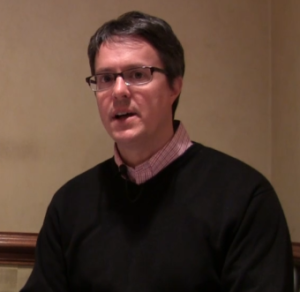 This interview is also available on iTunes and on Youtube.
Follow OMReport on Facebook, Twitter or as to get the newest interviews fast.
Transcript
In the third part of our Andre spoke with Adam Audette. Adam is Chief Knowledge Officer of the Rimm-Kaufman Group (RKG), a Digital Marketing agency based in Charlottsville, Virgina. In August of 2008 the RKG was named to Inc. Magazine’s list of the Top 500 Fastest Growing Private Companies in America.
Welcome to OMReport by Andre Alpar, your interview-focused podcast on topics from online marketing to internet start-ups.
Andre Alpar: Adam, so great to have you. Can you please introduce yourself.
Adam Audette: It’s great to be here, thank you.
My name is Adam Audette and I am the Chief Knowledge Officer at RKG.
And RKG is a digital marketing company
Andre Alpar: So Chief Knowledge Officer would mean you understand your ways even beyond SEO.
Is that true or is that —
Adam Audette: Well, I ‘m supposed to.
Andre Alpar: Or is that just a cooler title?
Adam Audette: It’s kind of a cooler title. I’ve always been a fan of the continuum data, information, knowledge and wisdom. And something my dad taught me, and Google sometimes talks about.
I don’t think I can ever work professionally over in the wisdom part, but I can work in the knowledge part.
Andre Alpar: You have twice the years of experience probably you can —
Adam Audette: Maybe so. Maybe I’ll be the Chief Wisdom Officer.
You know, I want take data and get information out of it and deliver knowledge strategically to our clients and to our team.
Andre Alpar: It seems to be like kind of a trademark of yours to be like more on the technical side of SEO.
I think it’s the most technical presentation I’ve ever seen in the States – yours, I mean.
Adam Audette: Cool. That’s great to hear.
Andre Alpar: Is that not the case?
You worked mostly in positions like that.
Adam Audette: Yes, I am very experienced in technical SEO. And the reason is I kind of cut my teeth in SEO in e-commerce, working with companies like Zappos and you have to be very technical to get stuff done
and understand how like kind of move things and move the needle for those sites so,
and I am also very passionate about the technical work.
You know that said, it’s just one piece and you need good content and you need links and social and you know all that other stuff too, but what we’ve found is that the great thing about technical SEO is that it is very reliable, you know, it may not be the most high-impact thing but it’s something very dependable that we can typically move the needle on sites.
Andre Alpar: It is sometimes hard to argue with technical SEOs especially when you’re coming to something that you haven’t work on before, when you are like cleaning up the mess and then they ask you, you know, ”what’s the revenue we get out of the cleaning?”
That’s kind of hard to state. How do you deal with that?
Adam Audette: It is hard especially because a lot of times with SEO it’s not a single kind of magic silver bullet, it’s a bunch of stuff that adds up to perform its lift. I like putting projections on work and kind of justifying the work with that, but typically we’ll save that for stuff that I know is going to be an impact of 15 or 20 percent or something like that and then look at the URLs that a SEO recommendation or set of recommendations will impact and then try to calculate an ROI that way.
Andre Alpar: Okay. I’ll jump to something that I still remember from your presentation.
You were mentioning pagination and that you really love to use the rel=”next” and rel=”prev” on that and you also said, specifically that one wouldn’t need on pages. Like on the first pages clearly you put an index and on pages 2, 3, 4 and so on. You would not need to put a ”noindex-follow” in the robots there. That, I didn’t understand actually. I would have done it differently, so I was wondering:
why?
Adam Audette: So, when rel=”prev” first came out and it was a new tool and it still is relatively new, but when it first came out, we said ”oh”, Google explained that if you annotate with ”rel-prev-next” that Google can still fire page, say, 10, page 12, page 7 in a search result if it’s relevant for the query, and we said, ”uuuh, we don’t want that, we really want page 1 to be the ranking candidate always,
forever, so we’re gonna ‘no index follow’ all the deeper stuff.” But what we’ve found in our test is that with ”rel-next-prev”, that we are not seeing that deeper pages fire, and sure they could, but we are not seeing those surface in search.
Andre Alpar: So I think they are figuring it out anyways.
Adam Audette: They seem to be doing a really good job of figuring out that series and kind of putting it all together into one, you know, family.
Andre: But if you put in the rel=”next-prev” and you had the no index, would you switch it back to index? Just to put it, just to make sure that the two concepts are not interfering or something like that?
Adam Audette: They are independent signals, so rel=”canonical’, rel=”prev-next” and ”noindex” could all be used
together. I…you know what I would do? I would remove it only if the data showed that it would be a good idea try to something new and test something. But if it’s working and ”no index” is on those pages with rel=”prev”, I would leave it, if it’s working.
Andre Alpar: Another thing I still remember from your presentation – you see I was I awake and listening…
Adam Audette: Taking notes? Alright!
Andre Alpar: I don’t have notes.
Adam Audette: Mental notes?
Andre Alpar: Mental notes. Exactly. I have a lot of those.
You were mentioning that at one e-commerce shop you were using products that are not available anymore and you would try to index them via a separate html site-map. That’s how I would interpret what I’ve seen – probably I didn’t get right, it was like some dead products.
And you said that didn’t work out and you said that basically you had those old products in the index and you would just, on the products, you would suggest what other products would be similar.
Adam Audette: That’s right.
Andre Alpar: So why did that not work out? What was the mistake on it?
Adam Audette: We had all these expiring products that were never gonna come back, let just keep them up
and let’s put a nice recommendation engine on there to say ”hey, we may not have this product but
you may be interested in these other products.” Seemed like a good idea. It really didn’t work.
Andre Alpar: What about it didn’t work?
Adam Audette: It didn’t drive any revenue.
And either it was because …
Andre Alpar: Probably the single products weren’t ranking all, you were just mistaking your data.
Adam Audette: Possibly. No, I think we had our data pretty dialled. It was a case where, you know, it was just, there weren’t enough expired and gone products for that strategy to work. I think for that strategy to work you need to do it at scale and you need to have tens of thousands of expired, out-of-stock items and you also need really closely related recommendations.
Andre Alpar: But in an e-commerce set-up, that would usually be like categories or filters that would match somehow products, you know. You could filter broader and broader, if you don’t have enough products, you make up something like that ….something from the same brand …
Adam Audette: Yeah, you could and that’s where your conversion hurts because as you start to widen that
and you put more and more products on there, you start to lose that relevance. Because they are looking for one green widget and now you are saying, ”oh, but we also have these yellow boxes.”
You know what I’m saying? You start to lose that relevance and that’s where it hurts.
Andre Alpar: So do you think, the average quality perception of your website may be becoming worse because of those dead products?
Adam Audette: We had low conversions on those pages and they didn’t drive revenue. I still think that’s a valid approach.
Andre Alpar: Do you take them out of the index?
Adam Audette: No, they are still out there, but there are no researchers put to them. They are dead products that are dying.
Andre Alpar: Are they then growing?
Because there are more and more of them?
Adam Audette: No. No. They are not being updated.
Andre Alpar: So you just did once like a bump and then didn’t build like a continuous system?
Adam Audette: I think, we did it for about six months and, you know, maybe over 20,000 products were probably on there and that’s about big as it got.
Andre Alpar: You mentioned you did Zappos.
I remember I’ve seen somebody somewhere else who also said he did Zappos for nearly ten years.
That wasn’t you, though?
Adam Audette: I was probably me. I started at Zappos in 2001.
Andre Alpar: No, he did something really really spammy. It must be something different.
There was like this product comparison thing that was like …
Adam Audette: Oh, the Product Showdown or Smack Down?
Andre Alpar: That’s rather spammy.
Adam Audette: It’s genius. That’s Aaron Shear who is my good friend and worked with me at Zappos for a few years.
Andre Alpar: I’m sorry, I didn’t say spammy.

Adam Audette
Adam Audette: No, it’s… you could call it aggressive. It’s aggressive. Basically what the Product Showdown was,
he would take – and this is a really interesting idea – he would take two products that weren’t related at all and he would surface that product, the image and the description of it, and the user reviews there. He put it versus this other product and then just generate those —
It was a game you could choose one that you want to win the battle and those links into —
Andre Alpar: It’s just like ‘Hot or Not’ but with products. That’s how I would describe it in a really really short way.
Adam Audette: That’s right, yeah.
So a really interesting idea to leverage this — so the idea was Amazon had done some research way back on putting highly unlikely content together to get it to rank better because it’s stuff that Google has never seen before in the world of the internet. But this is the kind of idea that Aaron can bring. He’s a brilliant SEO.
Andre Alpar: You were consulting him and he was consulting parallel?
Adam Audette: Yeah, we worked together. I was the SEO manager as a consultant so I really had an in-house role at Zappos for several years and Aaron came in. He has great depth experience in e-commerce.
He did a lot with shopping.com back in the day and he worked at Inktomi before that, so we brought him in as a hired gun.
Andre Alpar: Ok, I understood. So, you were also talking about mobile SEO during your presentation.
When you look at the different opportunities, there are three different options that Google tells us are okay. What would you say, are like the advantages and disadvantages of the different options? Because one that always comes to the top of my mind – we’ve just move our agency website and we switched it to responsive design because it’s so ‘En Vogue’. You want to do it also, because we suggest it to clients and then I figured out, okay, maybe it sucks for mobile because the html-file is still huge and maybe it would be cooler to have like a really slim mobile version and then do the alternate and canonical thing.
Adam Audette: Yeah, really fast, yeah.
Andre Alpar: What other options ?
Adam Audette: You know, I think the thing with responsive is that everyone’s talking about it. It’s the cool thing
and Google is pushing it pretty hard as ”Hey! This is our —
Andre Alpar: it’s the dominant solution.
Adam Audette: Our dominant solution. But we have these other two, you know.” You really have three valid choices.
Responsive, to me, the weakness in it is you’ve got one set of html. So, to your point, you’re going to have larger page-size for your mobile, but you also have the same content. Basically, it’s just going to be resorted. And a lot of companies, take an insurance company for example, they probably want to a different mobile experience than desktop experience because they see those user experiences as different and user behaviour as different. So you lose the opportunity to capture somebody on a mobile or on a tablet device if you’re using responsive in some ways.
Andre Alpar: So is there like your favourite solution of those three?
Adam Audette: I still think honestly the m.dot-subdomain is a great way to go. It’s simple, it’s well understood, it’s well supported with the switch-board-tags. And you can still get all of the advantages of a unique experience on mobile and really fast on mobile, too.
The other thing with it – one of the attendees in our session actually asked this question – is Google says that are some, at least some of their ranking factors in mobile are going to be mobile specific.
So if you’re doing responsive and you have the same html as desktop, are you losing opportunity to rank for ”mobile specific”, you know, stuff? All I can say is that with Google pushing responsive as hard as they are, they must have that figured it out in some way.
Andre Alpar: How are your experiences with rel=”canonical”? No, sorry, with ”hreflang”, using it? Do you have robust experience with that? Does it have problems? Does it interfere with any of the other concepts in your experience?
Adam Audette: It doesn’t interfere. It’s very complicated. When it first came out, we started doing testing with it right away, and this was before they supported putting it in XML. And it was a nightmare! You had to put all these hreflang-tags on all of your pages. As far as international, it works very well to set up the signals and kind of give that local signal to Google.
You can use it along with GWT Region Targeting, and a good subdomain-strategy or TLD-strategy, whatever you’re doing. It’s nice to have another tool. It’s not a cure all for international and there’s still a lot of stuff that happens. There are still like technical hiccups, some of them related to ”hreflang” and wrong implementation, so a lot of times we will see it implemented but it won’t line up correctly.
Andre Alpar: So what do you think? Let’s say if I have a US-website and then I want to have a UK-subsidiary
and I set up duplicate content over there, implement the ”hreflang” correctly and then my UK website will be ranking for the people searching from the UK because it does a search in their place. So instead of the .com, probably the co.uk, or the corresponding subdomain will be ranking.
The local top-level-domain, it will be generating user signals as like click through rate, bounce rate and so on and so on.
Do you think those will be attributed to the dot-com or to the uk-domain?
Adam Audette: I think part of what ”hreflang” is supposed to do is – sort of like rel=”prev-next” – is consolidate those signals. So that the – you know, in your example – the co.uk is inheriting some sort of ranking signal and somewhere, maybe it’s being shared across all of them. But it’s a signal that is associated with that specific region and, you know, this is one of the subtleties of this and part of why I like rel=”prev-next” and ”hreflang” is that they are both html5 annotations.
Google is like — To me, this signifies where they are going, you know, and that there are going to be a lot more of these tools in our future, so. I think – I would speculate, it’s just a speculation – there’s some sort of ”link equity anchor texts”. You said interesting stuff about kind of user data, impressions, CTR, bounce and all that stuff – that’s probably associated in some way with ”hreflang” when you use that.
Andre Alpar: What do you think, What is the most typical mistake you stumble over when you first come to a client? Are there the typical three things that you know, I bet that they haven’t got that?
Adam Audette: You know, yeah, on the technical side, typically faceted navigation. Pagination is still a problem.
Sites aren’t doing enough to be faster, so we see a lot of opportunities to speed up their sites. There is latency that shouldn’t be there. And then on the content side, we still see a lot of – this is especially true in retail, but – using merchandising copy and not writing unique copy on product pages, having category pages that really have no copy at all. Their site search tends to be really bloated and there’s not a —
Andre Alpar: So it is also in the index?
Adam Audette: Exactly.
Andre Alpar: It’s been indexed?
Adam Audette: That’s correct. And that’s something that we often see. And companies won’t necessarily have a strategy around their site search because they think about it internally. They don’t think about the way it’s getting crawled and indexed and the problems it’s causing there.
Andre Alpar: I am wondering because of the types of problems that you deal with. Are you mostly working for publishing companies or are you working for businesses that are transactional, as well as publishers?
Adam Audette: So at RKG, we have clients across every category but e-commerce is
by far in a way our specialty. So we have, the most of our clients are in e-com.
Andre Alpar: Is it just because of you guys are really good at that or because that fits perfectly to do SEO and that’s it?
Adam Audette: It’s because… So RKG acquired my company, AudetteMedia a couple of years ago, and AudetteMedia was known for e-commerce SEO, based largely on my experience with Zappos and building kind of that there.
And then RKG was really focused on direct marketing with a retail and it just happened to be that way. What’s interesting is that in the e-commerce space, they tend to be the most sophisticated companies. It’s very competitive and there’s a lot of money at stake, obviously, and so there’s a lot of innovation, and there is a lot of focus on SEO as a strategy. And now we’re trying to go to travel and finance and other areas and apply those learnings, because in some ways travel, for instance, lags a bit behind in terms of how quickly they are adopting a lot of the cutting edge SEO. So it’s interesting, but yes, mostly we’re known for SEO, because we are hardcore direct marketers.
Andre Alpar: Nice. Thanks a lot for the interview.
Adam Audette: Thank you. It was a pleasure.